
We found it beside a dental clinic and a car denting shop.
A map gives you a name, not a neighbourhood. Ours said Moorish Mosque and we stared in the screen in disbelief. Moorish? In Punjab? So, of course we had to find out. Hours later, we turned off the bypass and into the city, past the automotive parts market, past Nayyar Sweets, past a hospital and a madhouse of a taxi stand, and then there it was: forty metres of terracotta minaret rising.
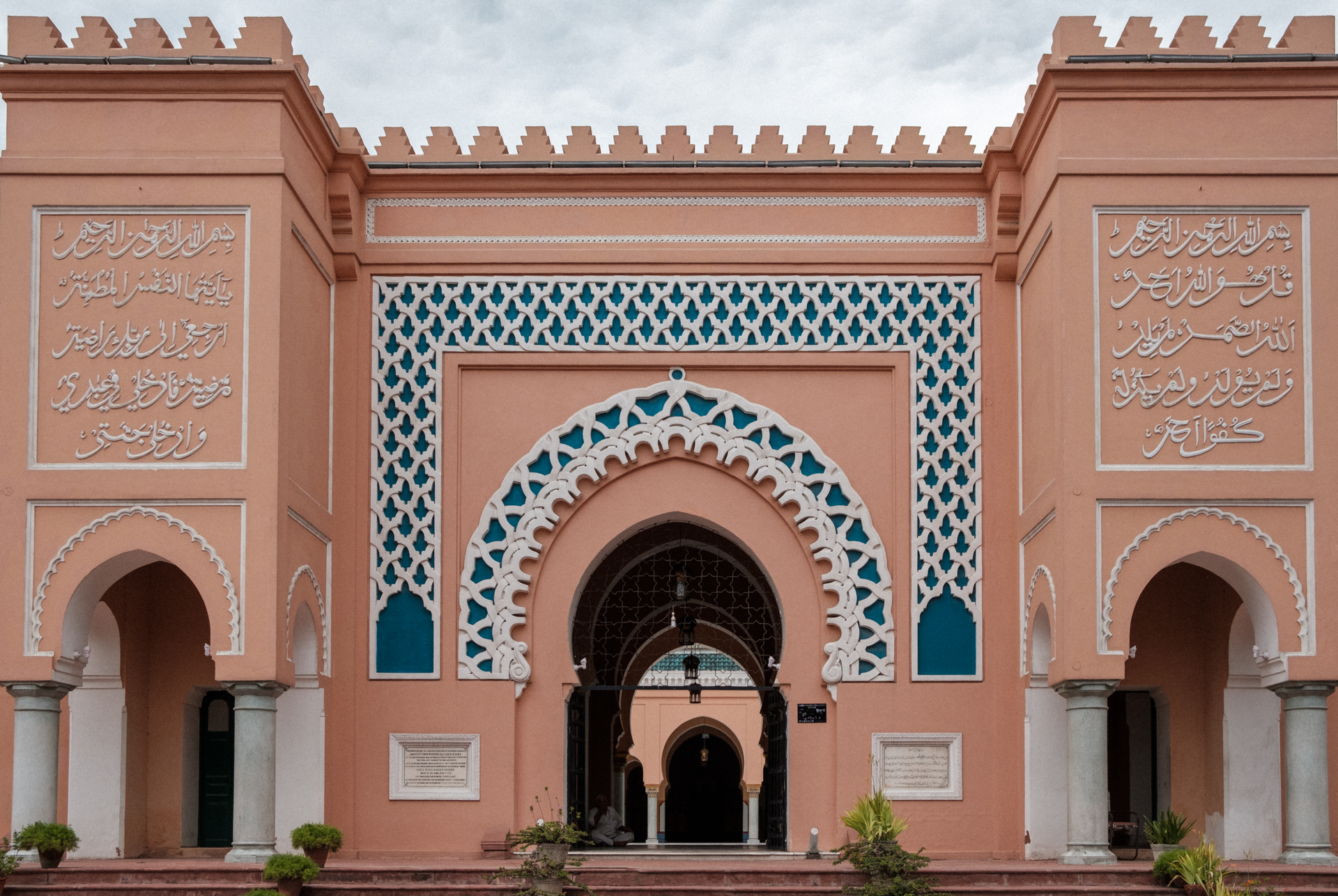
The setting refuses grandeur. No ceremonial approach, no plaza, no breathing room. The mosque simply appears, as if Marrakesh had been folded into a small Indian city and everyone had agreed not to mention it. Green tiles. Horseshoe arches. A minaret that belongs on a different continent.
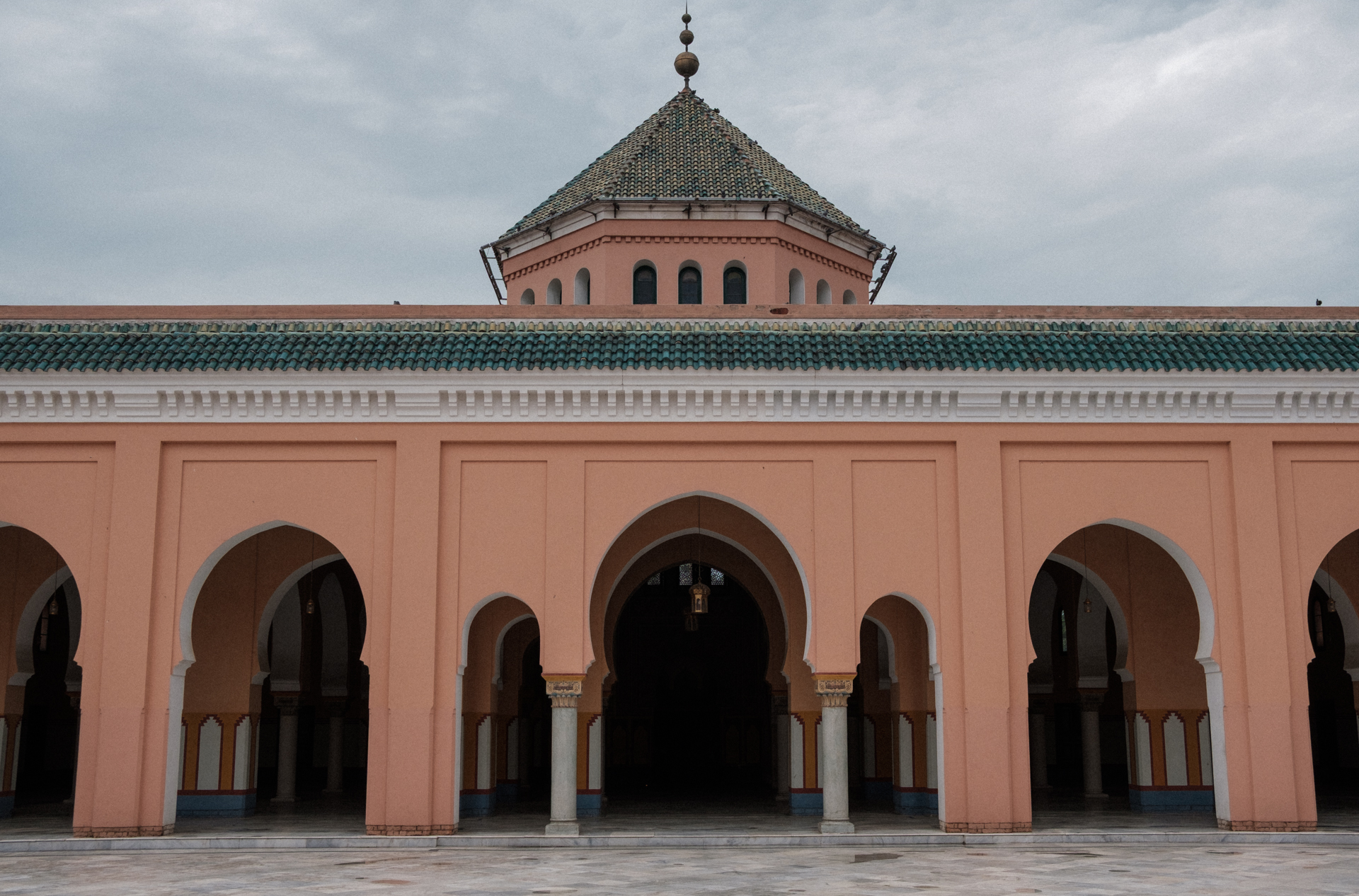
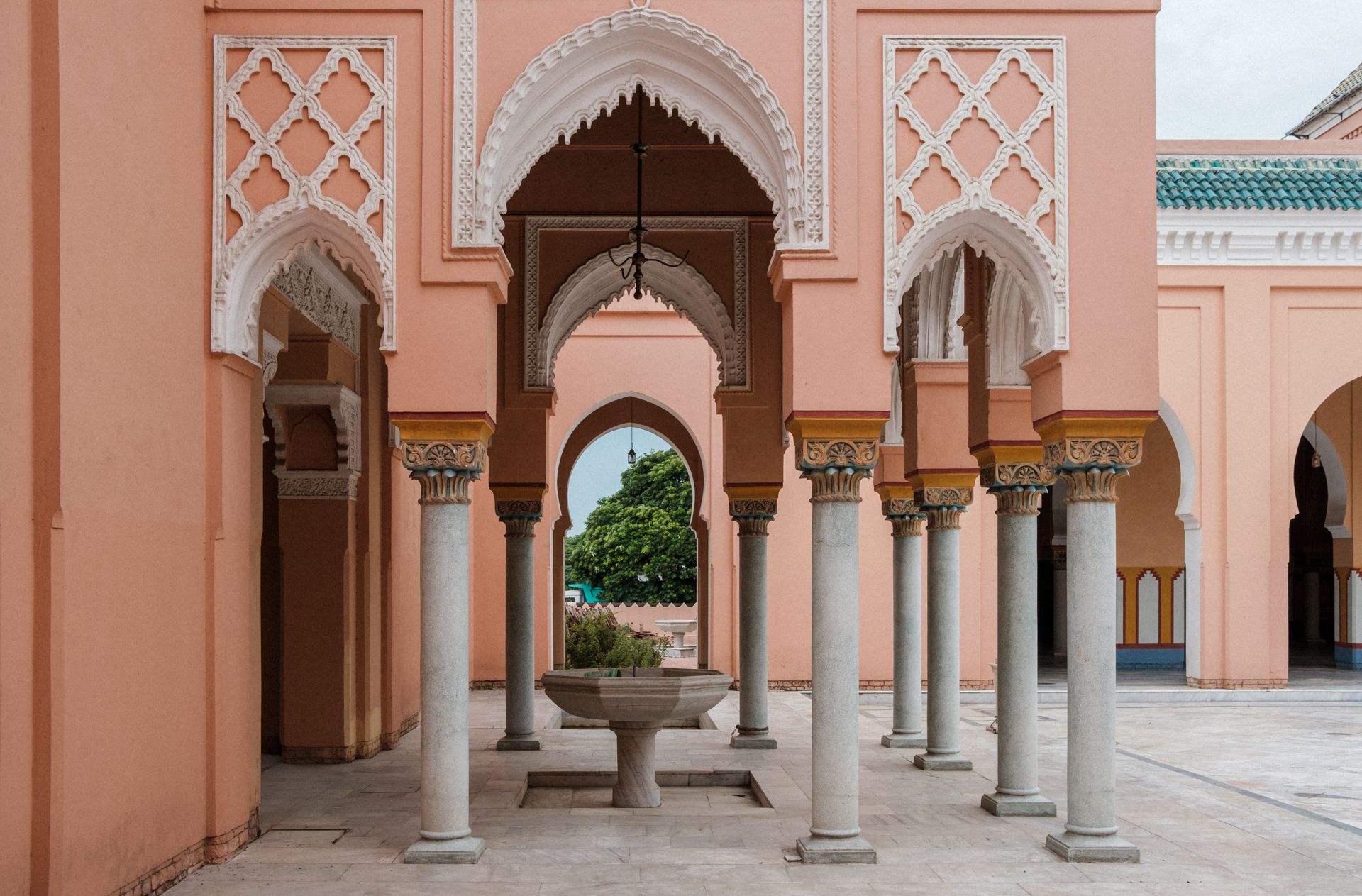
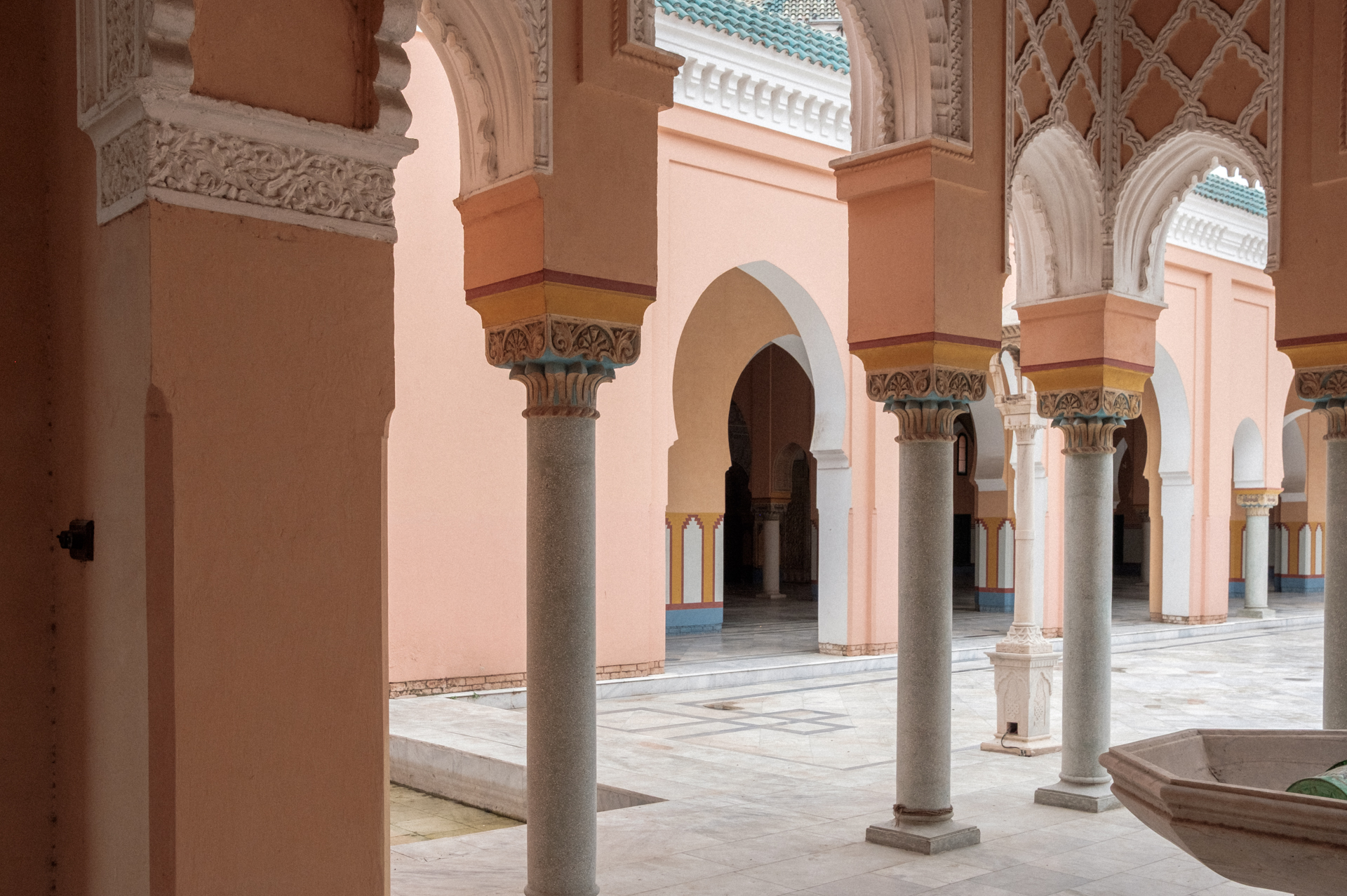
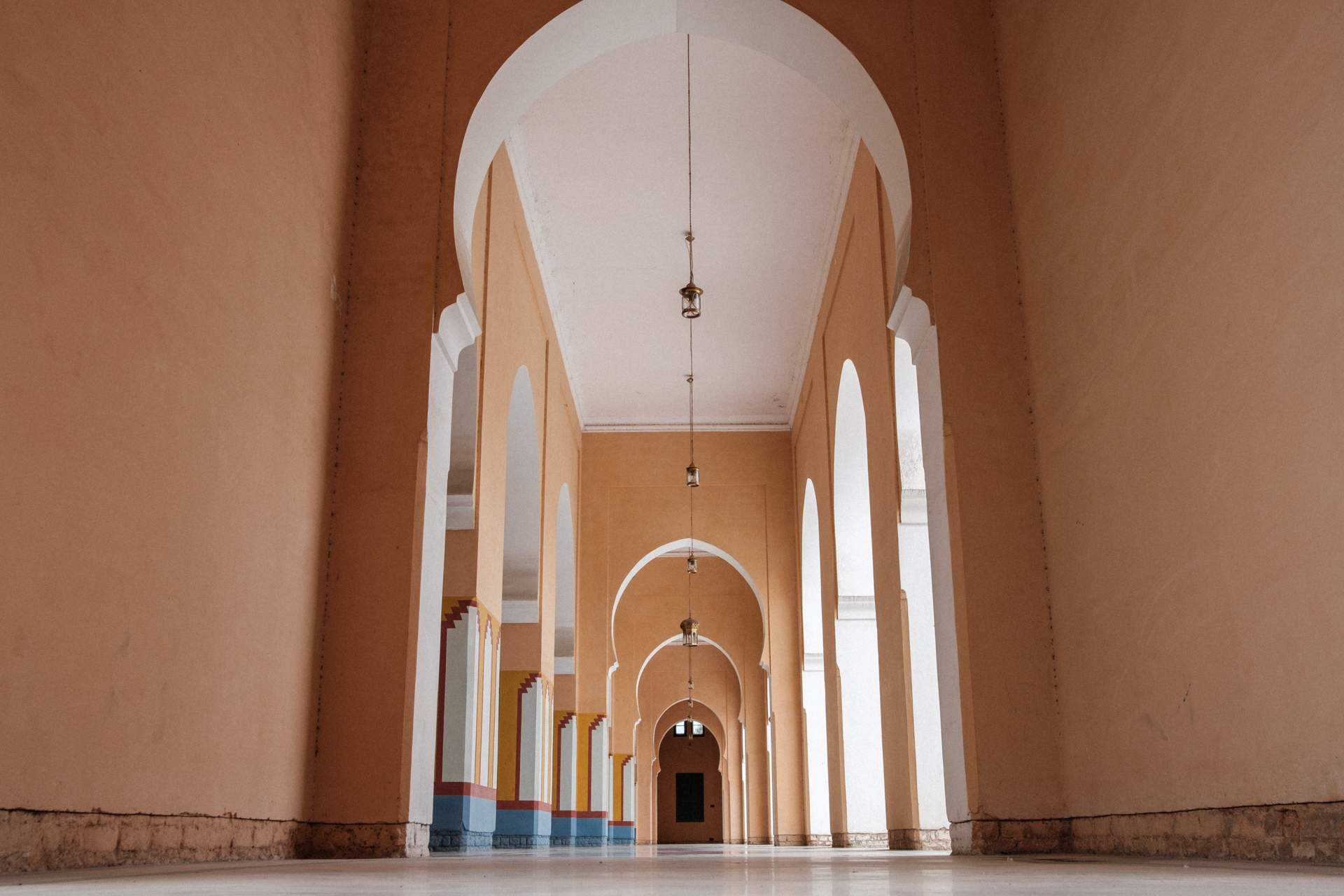
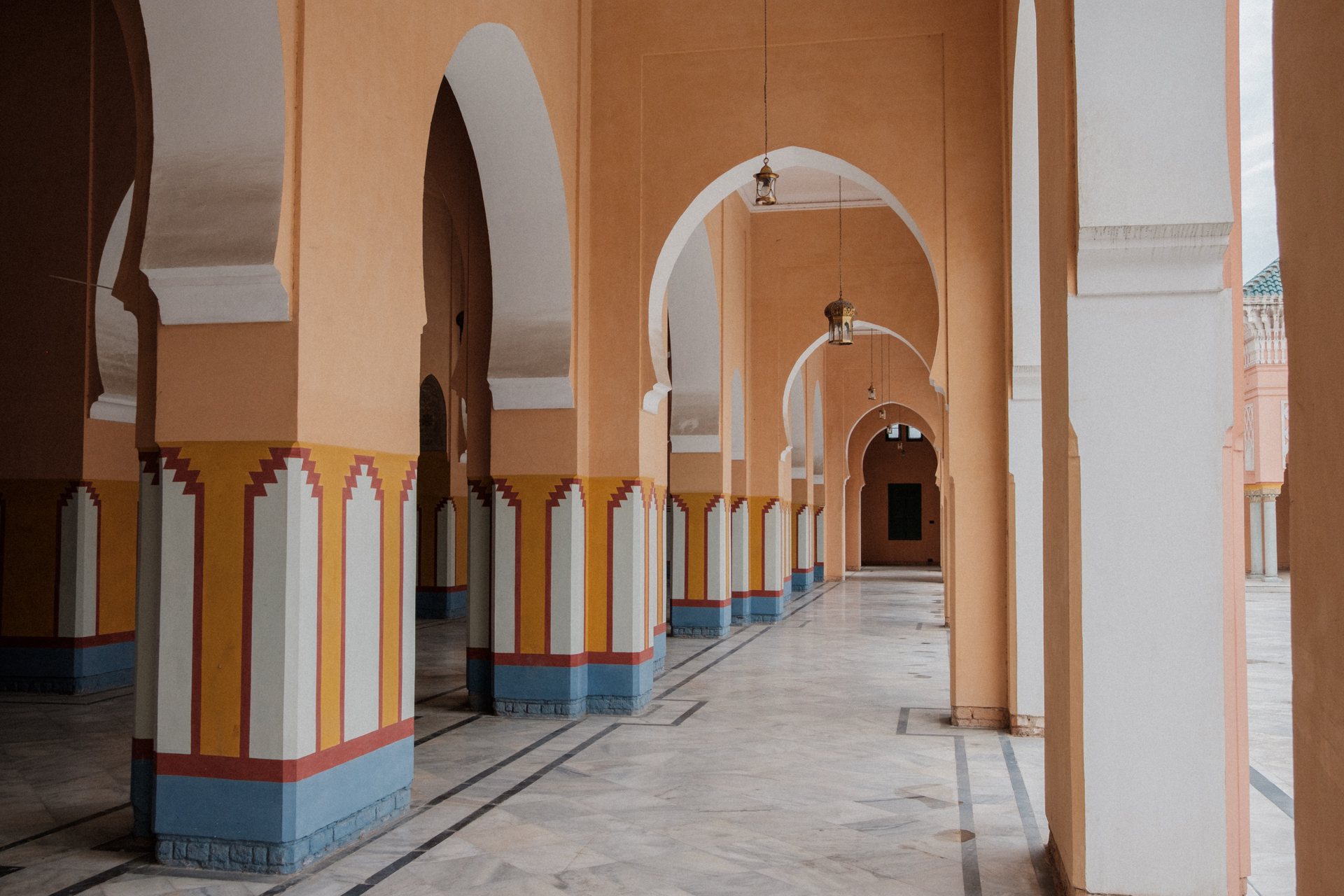
Inside, the courtyard swallows sound. White marble underfoot, black lines tracing geometries that lead the eye toward the mihrab. The fountains are dry, but the ablution basins hold their positions, patient as prayer.
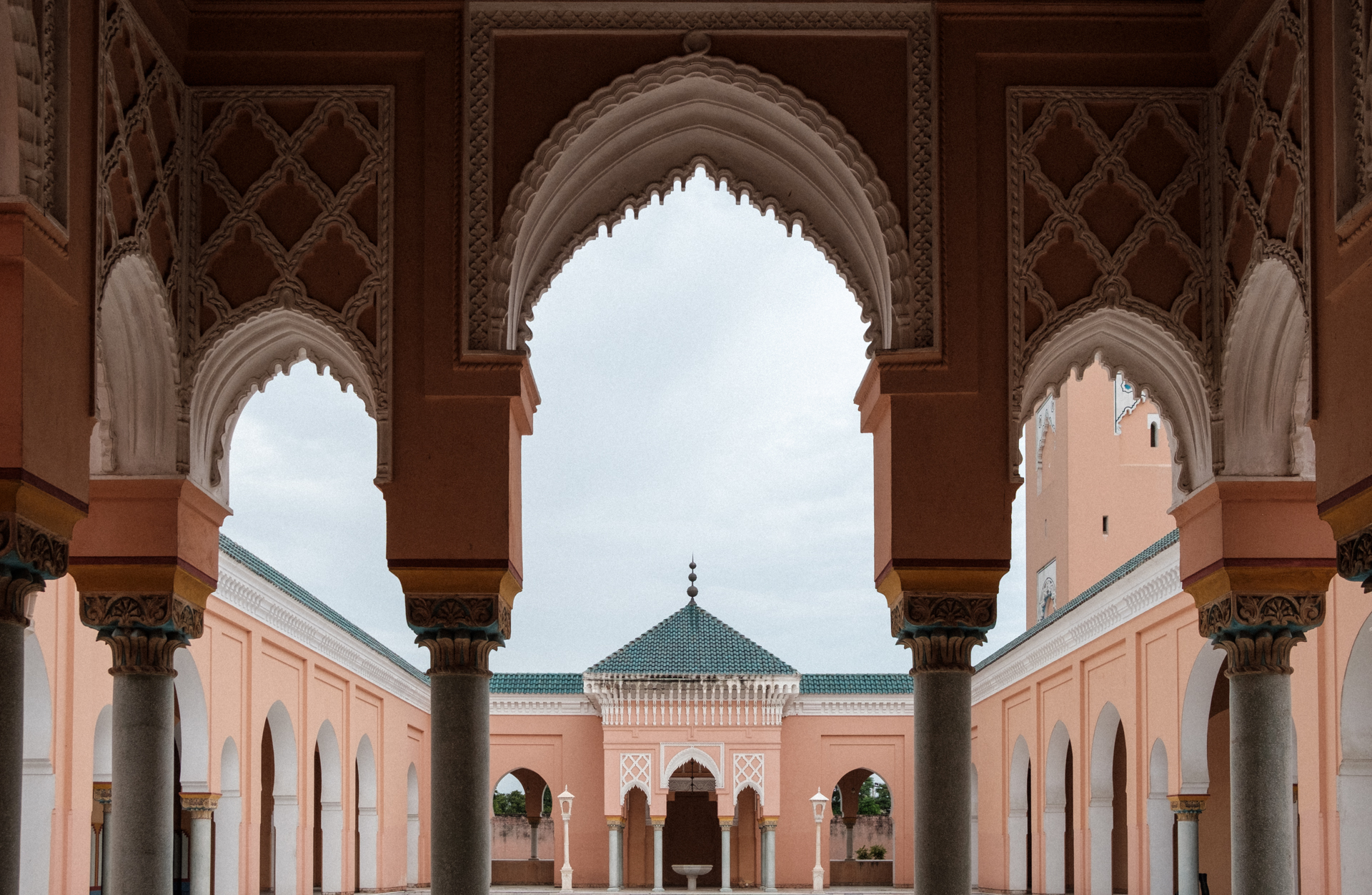
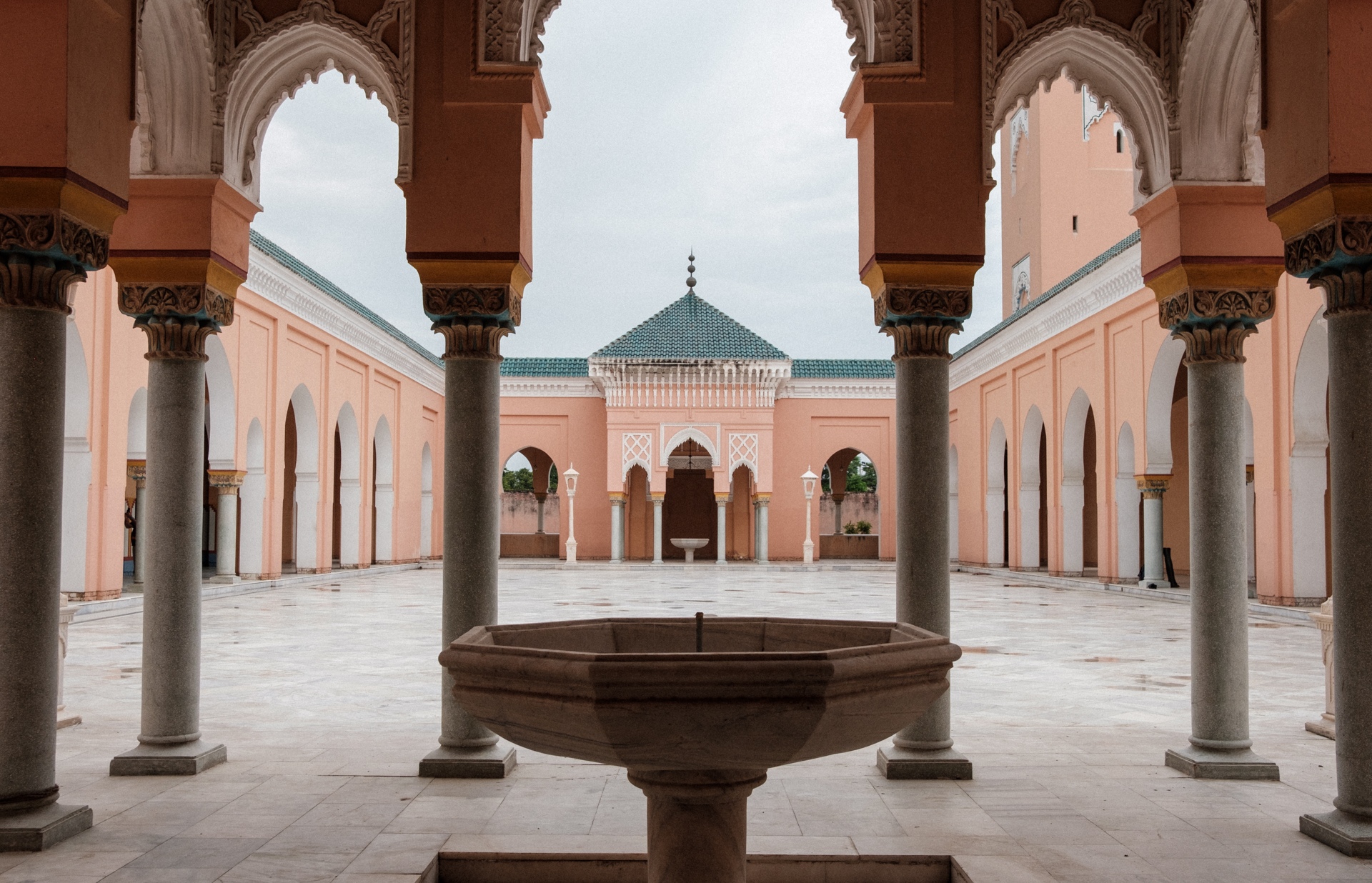
In 1926, when construction began, the Viceroy questioned the expense. Six lakh rupees — serious money, even for a Maharaja. Jagatjit Singh’s reply has become local legend:
“Sixty per cent of my population comprises my loyal Muslim subjects. It is only in the fitness of things that the best place of worship in my state be constructed for them.”
A king who spoke seven languages, who’d seen the Koutoubia Mosque in Morocco and couldn’t forget it, who believed his subjects deserved something that beautiful. He hired a French architect. He brought in artists from Lahore. He built them a piece of North Africa in Punjab.
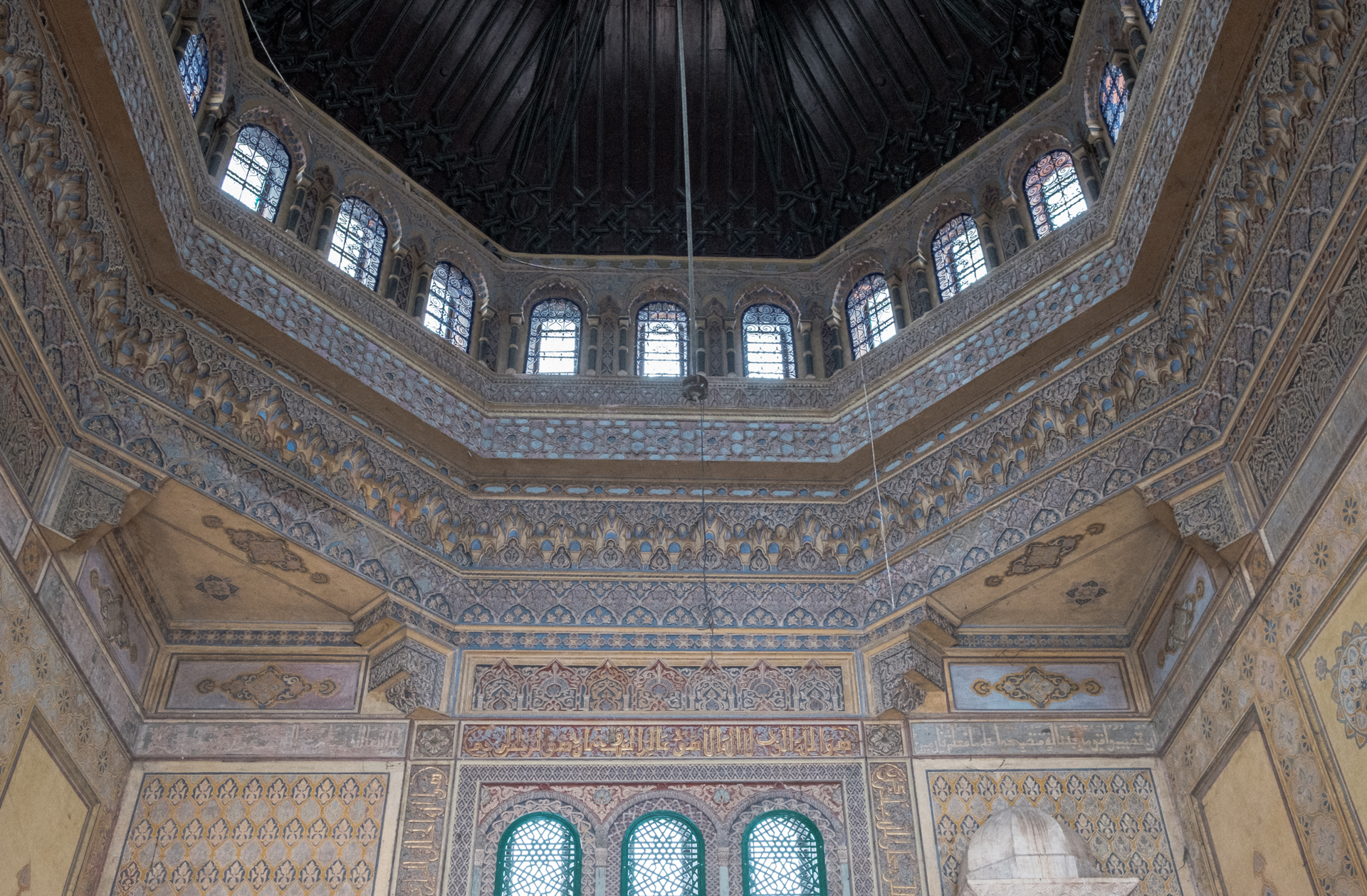
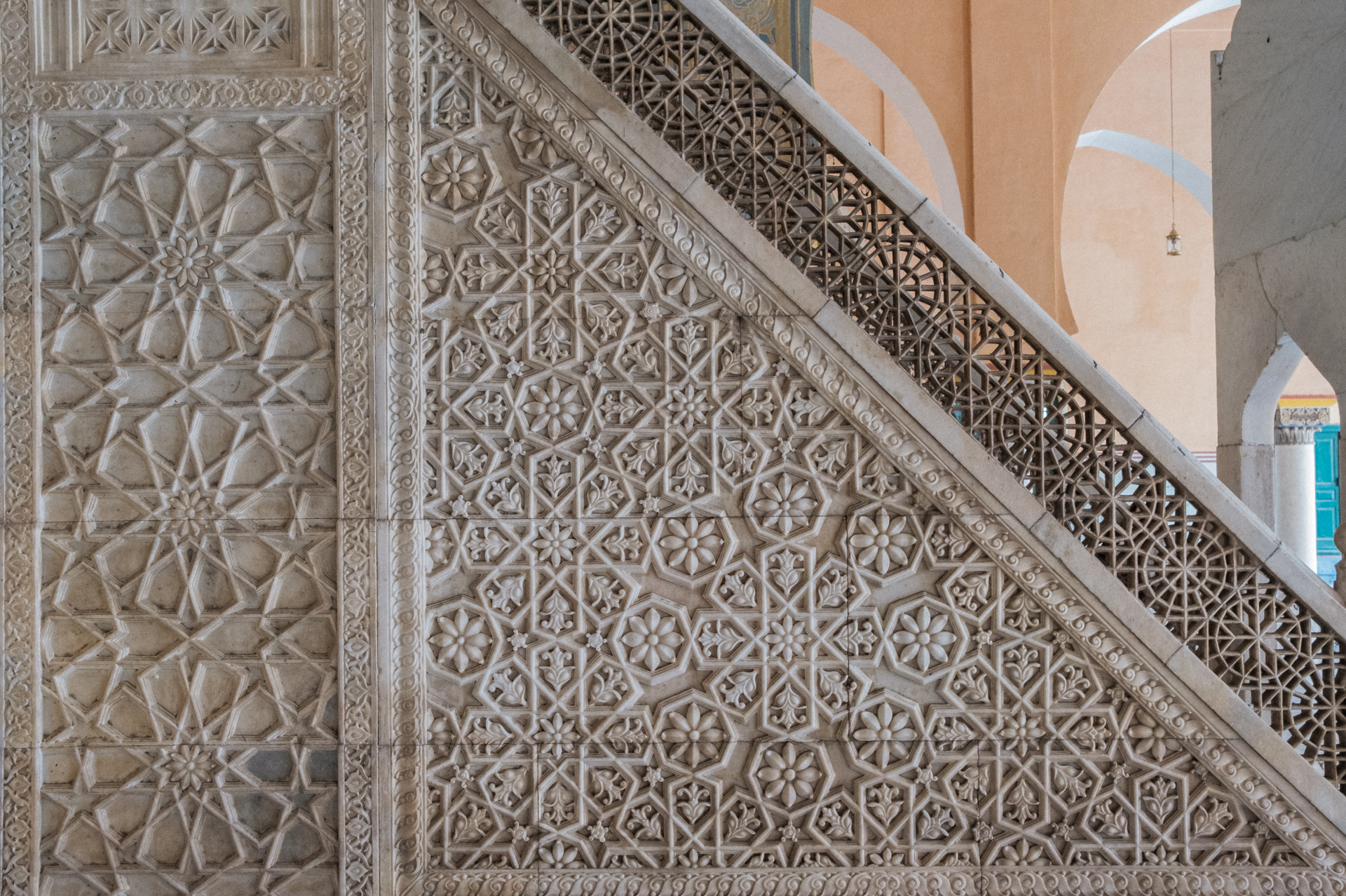
The arabesques on the inner dome were designed by students from Mayo College, Lahore — a city now in another country. The colonnades stretch toward the mihrab, brass lights hanging from wires, everything sun-warmed and silent.
Jagatjit Singh died in 1949, two years after independence. His palace is a school now. His state joined the new India, part of the great folding-together of princely territories.
The mosque endures. It has weathered neglect and partial restoration. We were told Friday prayers had resumed after years of silence.


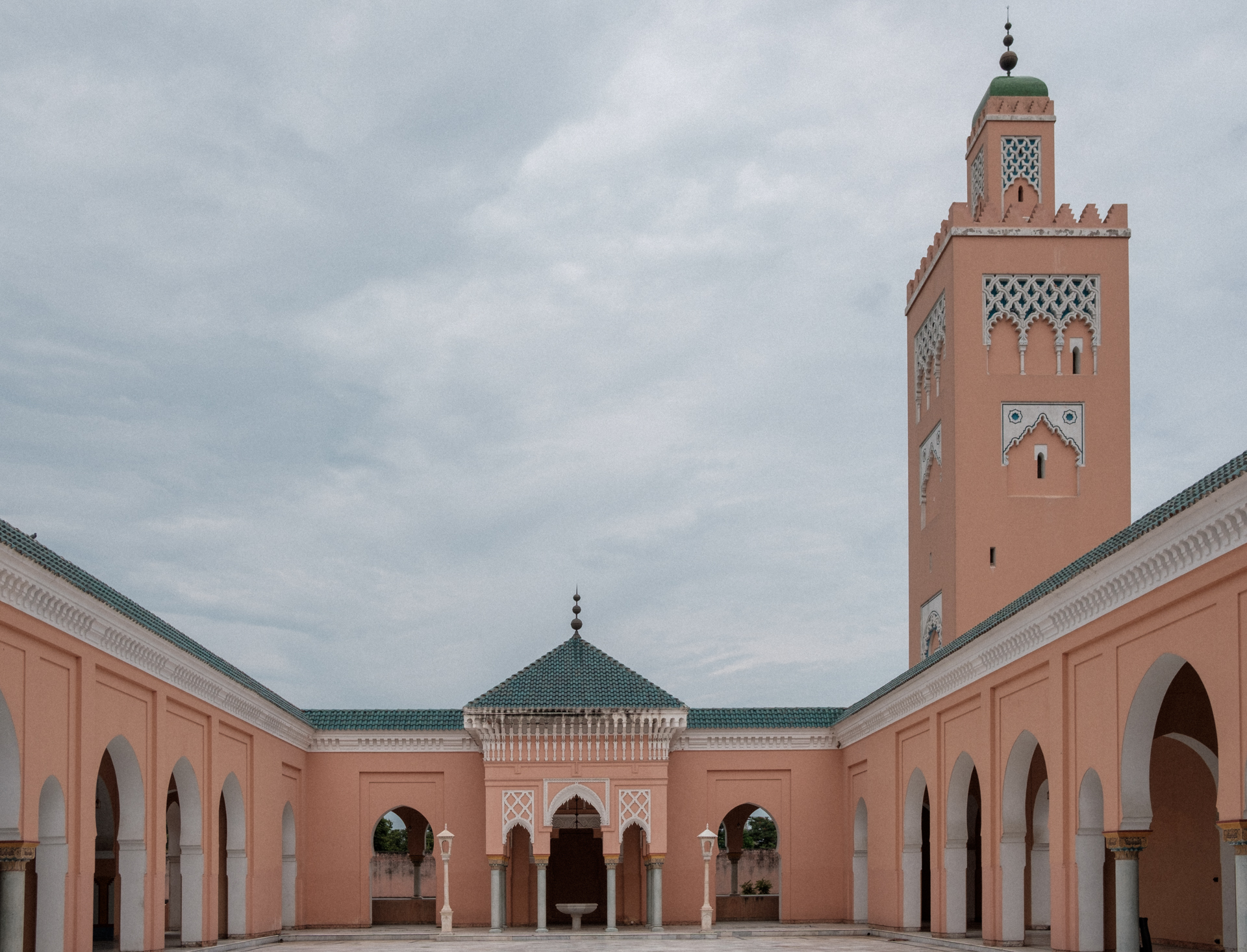
Outside, Kapurthala continues: dust, diesel fumes and chaos. The mosque asks nothing of its surroundings. It simply stands, still strange, still beautiful — proof that someone once believed his neighbours deserved the best he could imagine.
