Of Walks Along the Indus
I. The Colour of Snowmelt
The first time I saw the Indus, I could not name its colour.
The aircraft had begun its corkscrew descent into Leh, threading between mountains that rose higher than our cruising altitude. I was craning across the aisle, trying to see what the passengers at the windows were seeing. Two monks in maroon robes noticed my straining and leaned back with wide grins, opening a gap through which I could glimpse the river. It wound through the valley floor, impossibly bright against the brown and grey of the rock.
It was not blue. It was not green. It was not grey, though grey lived inside it the way a bass note lives inside a chord. The colour seemed to carry temperature: an intense cold that could only have come from the snowmelt of the highest mountains in the world. I have tried, since, to call it turquoise, aquamarine, glacial. None of these are right. The Indus is the colour of the Indus. It refuses analogy.
“The best way to experience it,” said the monk in the middle seat, unprompted, as though he had been waiting for me to look, “is to walk next to it. On its banks, in its valleys, and high up above it.”
I did not know then how often I would return to that sentence. Not along the river, which would imply direction, destination. Not beside it, which would suggest a companion matching one’s pace. Next to it. Proximity without intimacy. Presence without claim.
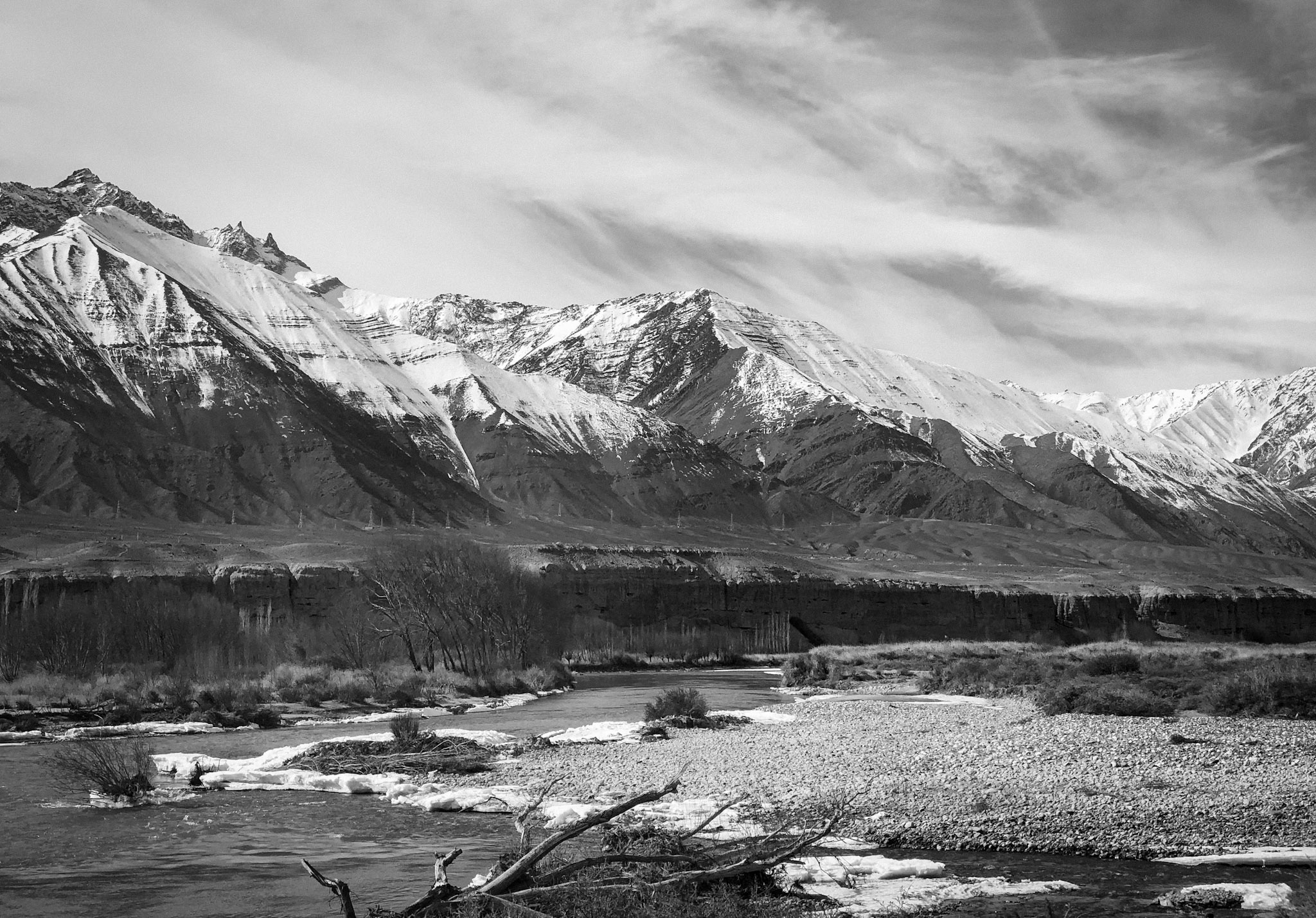

The cold at four thousand metres is not like other cold. It does not seep; it announces itself. You step out of a vehicle or a doorway and your lungs tighten, drawing in air so thin and dry it feels like breathing light. Your skin knows immediately: this is not a place that wants you here. And yet the cold is clean. It has no malice. It is simply the temperature of a world at a scale beyond the human, and if you stay inside it long enough, something in you begins to calibrate to that scale.
The light, too, is different. Harsher, purer, stripped of the atmospheric haze that softens lower altitudes. Shadows fall sharp and black. The UV burns through sunscreen and leaves your neck raw, your lips cracked. But the clarity is astonishing. A peak that looks an hour away might take a full day to reach. The eye is not accustomed to seeing this far, this cleanly.
And the silence. Not an absence of sound but a different quality of presence. Sound carries farther than it should, as though the thin air offers less resistance. A rockfall on a distant slope reaches you seconds later, small and precise. Your own breathing becomes loud. The river, when you walk next to it, makes a sound that is not quite rushing, not quite murmuring. A kind of continuous exhale.
The Indus is not the Ganges. The Ganges has accrued millennia of devotion, a goddess caught in Shiva’s hair, the cremation ghats and pilgrim traffic that make the water itself secondary to the mythology it carries. The Indus has no such weight, at least to most of us. It gave its name to the subcontinent, but that naming was done by outsiders, by Persians and Greeks at the edge of their known world. And after 1947, the Indus became a river of Partition, its waters divided by treaty. In Ladakh, which is the only stretch where the Indus still flows through India for any significant distance, the river is austere, almost silent. It does not invite prayer. It invites something else, a quality of attention I do not have a word for.
Over several years, across many visits. I walked next to the Indus and its tributaries. The walks were part of longer journeys: to Ulley in the west, where the snow leopards descend in winter, and to Hanle in the southeast, where the Changthang plateau stretches toward Tibet. The road follows the river for long stretches, curving through valleys, passing beneath monasteries perched on outcrops of rock. I would leave whatever vehicle I was in and walk for hours, sometimes for the entirety of the day, while the others went ahead.
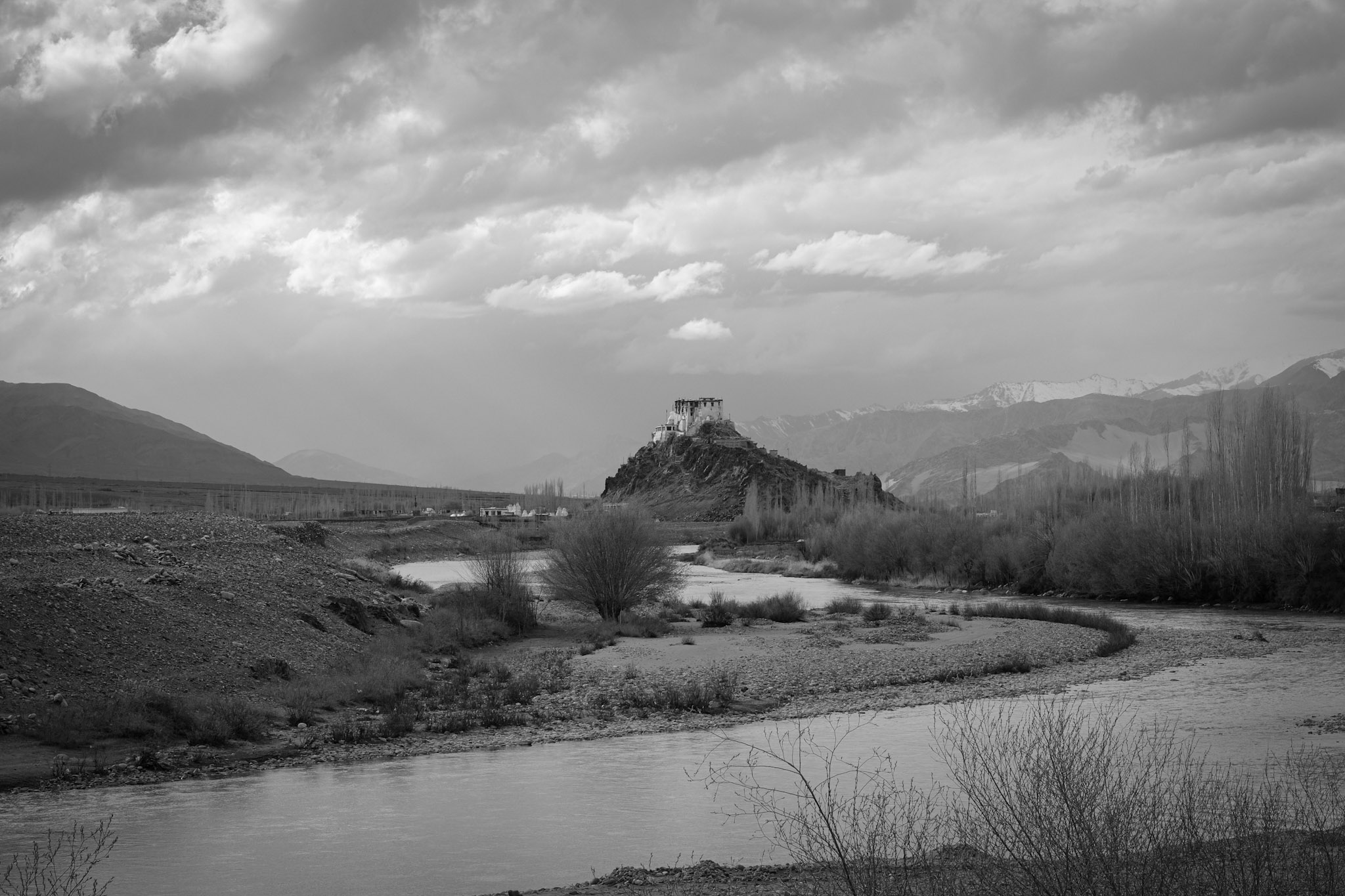
The river was not the destination. The river was what I walked next to while going somewhere else. But walking next to it changed the quality of the going.
There is a thing that happens on these roads, where the path turns and the valley opens, and the river turns with it. You round a corner expecting more of the same brown slope, the same grey scree, and suddenly the Indus is there below you, curving into a new stretch of valley, a new colour of light on its surface. Each time, it catches the breath. Each time, the scale reasserts itself. You are small. The river is old. The mountains are older.
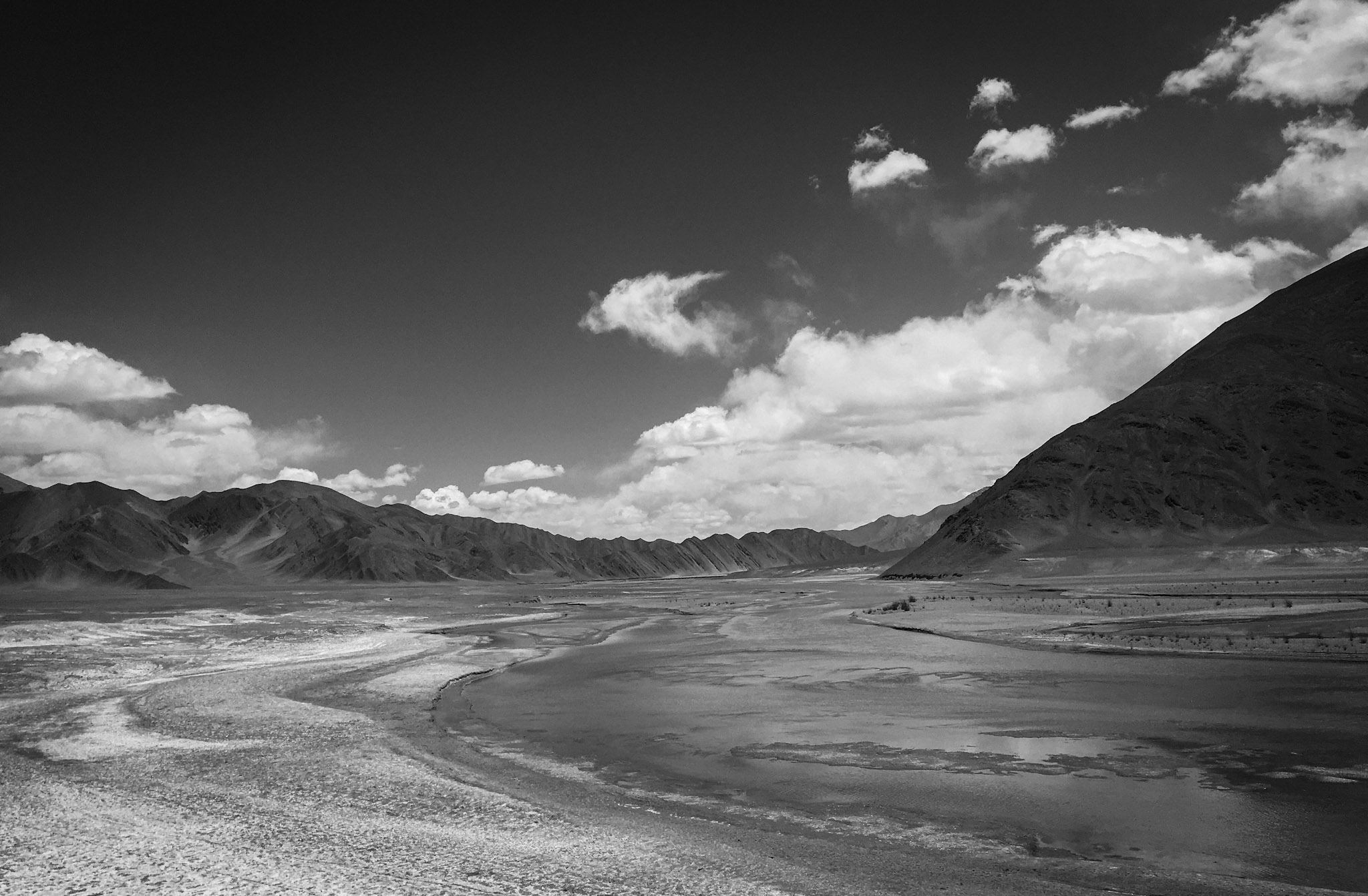
I often ate thukpa, the broth warming me from the inside, the noodles soft, the chili sharp. I ate Maggi cooked on wood stoves in homestays where the blankets smelled of smoke and were never quite enough. I developed blisters that wept, and sunburns on my neck that peeled in sheets. At night, despite the fire, I slept in all my clothes and still woke with cold feet, cold hands, cold face. In the morning, I walked again.
I came to these walks carrying weight I could not put down elsewhere.
There was old grief: V, who had been dead for years by the time I first came to Ladakh. There was newer grief, a relationship brief in duration but not in consequence. The cold did not answer any of the questions these losses raised. The river did not answer them. But they were easier to hold in a landscape that did not require answers, that had been here for longer than the questions and would remain after they ceased to matter.
The mountains do not care about your grief. The river does not care. An immense indifference which said: You can simply be sad. You can simply walk.
Try as I might, it proved impossible to capture the walking in words. The hue of the water in late afternoon. The way sound behaves at altitude, sharp, carrying further than it should. The geometry of the valleys, the seven-thousand-metre walls, the sky so deep it seemed to curve. I took photographs instead, and told myself the photographs were enough.
They were not enough. A photograph can show what I saw, but not what the seeing did to me. A photograph can record the colour of the river, but not the way the colour’s refusal to be named became, over time, a kind of teaching.
Nan Shepherd, who walked the Cairngorms in Scotland for fifty years, wrote: “The journey is itself part of the technique by which the god is sought. It is a journey into Being; for as I penetrate more deeply into the mountain’s life, I penetrate also into my own.”
The Indus is not a mountain. But it comes from mountains, from glaciers older than any human religion, from snowfields that have never been walked. The source, near Mount Kailash in Tibet, is called Singi Khamban: the Lion’s Mouth. To walk next to the river is to walk next to that origin, that coldness, that immense indifference.
The god is not found. But the walking is undertaken. And something in the walking begins to change the walker, though he may not notice until much later. Until he is home again, in the rooms where he is expected to be whole, and finds that the costume no longer fits the way it once did. Not because the walking fixed anything. Because the walking made room for what could not be fixed, and that was enough.
II. The Changthang Plain
The road to Hanle takes you away from the Indus, then back toward it, then away again.
You leave Leh heading southeast, following the river past Karu, past Upshi where the road forks. One branch heads south, towards Keylong and Manali. The other, yours, continues along the Indus until Mahe Bridge, then turns south-east into a landscape that has no equivalent anywhere else I have been.
The Changthang. The northern plain. It is technically a high-altitude desert, part of the Tibetan Plateau that extends into India. But the word desert suggests heat, sand, emptiness of a certain kind. The Changthang is not that. It is cold and immense and coloured in ways that seem to belong to another planet: ochre, rust, purple, grey, the mountains folded like cloth, the valleys between them vast and dry and silent. The river, when you see it, is a thread. You are no longer next to it. You are above it, looking down from a height that makes the water seem like an accident, a thin line of silver wandering through a landscape that has no need for it.
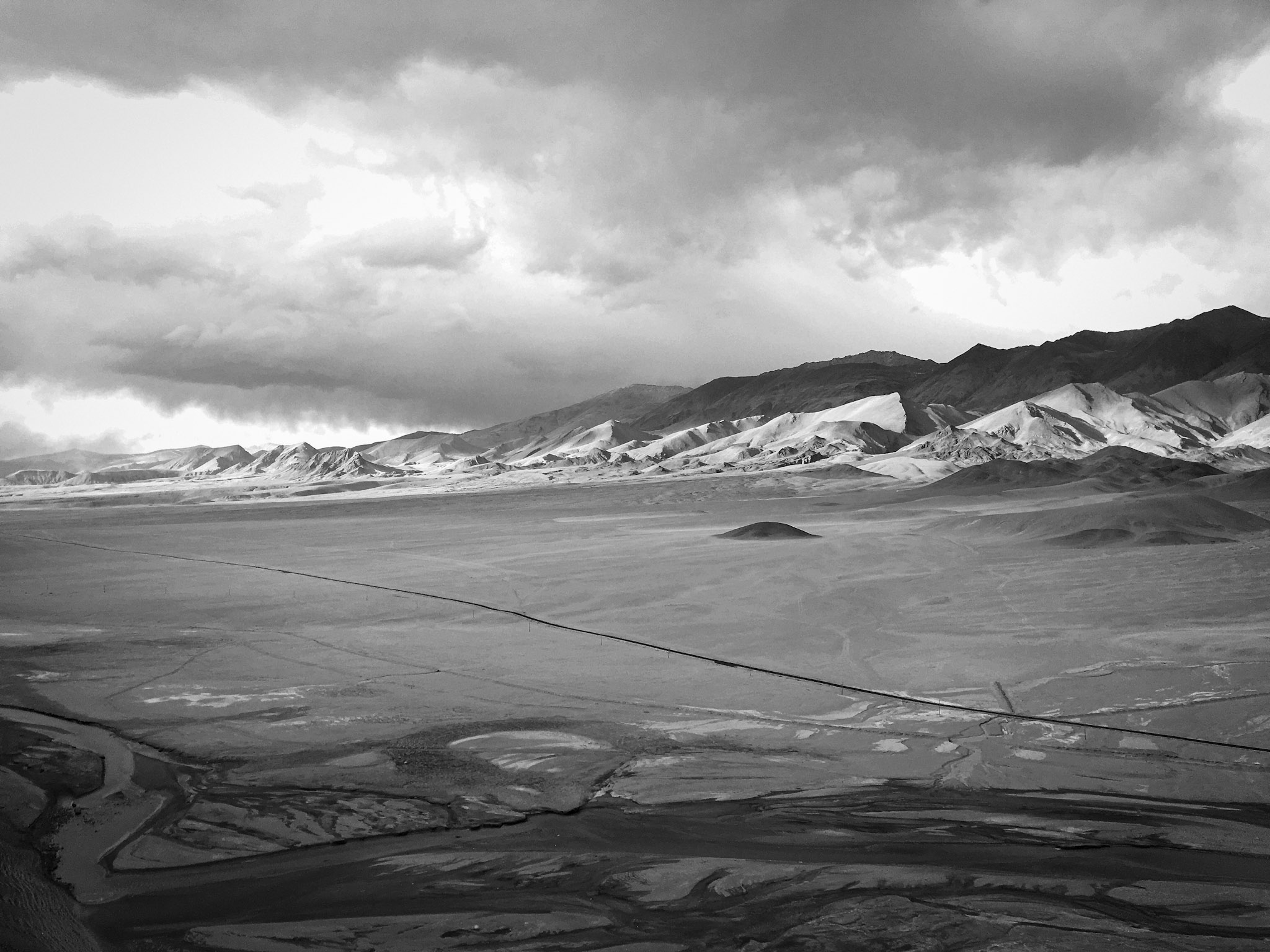
I came here first, before Ulley, before the other walks. It was several years after V had died, and I thought I had done the work.
V had hazel eyes and dark thick hair she kept trimmed at or just above her shoulders. We argued about this constantly. She would have looked beautiful with long hair, and I told her so, and she told me it was her hair and not mine, and we went around like this for years, one of those fights that is not really a fight, that is just the texture of two people who have grown into each other’s irritations. She smelled of bergamot. Not perfume, just her skin, some chemistry I never understood. She was tall, nearly my height, requiring only a small tip-toe when she kissed me.
She died in the way that young people die: suddenly, absurdly, in a manner that made no sense and offered no lesson. And then she was gone, and the arguments about her hair seemed to belong to a conversation that had been interrupted mid-sentence, a conversation I was still waiting to resume.
For years, I carried this. Not actively, not always consciously, but as a weight distributed through the body, a tension in the shoulders, a constriction in the chest that I had learned to breathe around. I functioned. I worked. I made the appropriate sounds of a person who has moved on. But solitude has a way of returning you to what you have not completed. In the city, there is always noise, always movement, always the next thing requiring attention. On the Changthang, there is nothing but the wind and the cold and the immense indifference of the plateau, and in that nothing, the old grief surfaced like water rising through rock.
The drive from Leh takes eight hours, sometimes more. You pass through Chumathang, where hot springs steam in the cold air. You pass through Nyoma, a military town, one of the last places to buy supplies before the plateau opens up. After Nyoma, the road climbs and the valley widens and the sky comes down to meet you.
I do not know how to describe what the sky does at 4,500 metres on the Changthang. It presses. It has weight. In other landscapes, the sky is above you, a dome, a ceiling. Here, it is around you, beside you, inside your lungs with every breath. The blue is darker than it should be, almost violet at the zenith, and at night, when there is no moon, the stars are so dense they seem to have texture, like something you could touch.
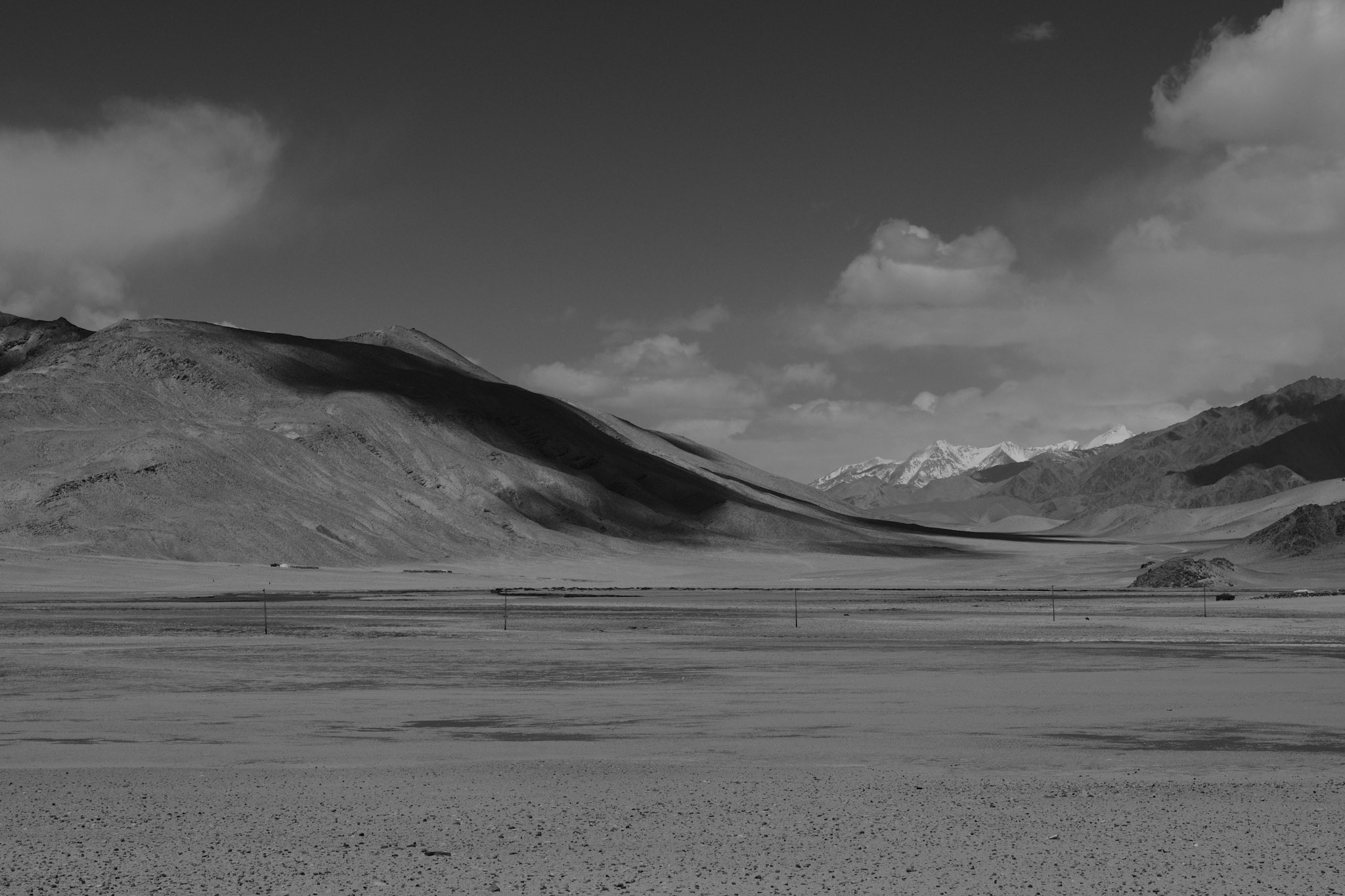
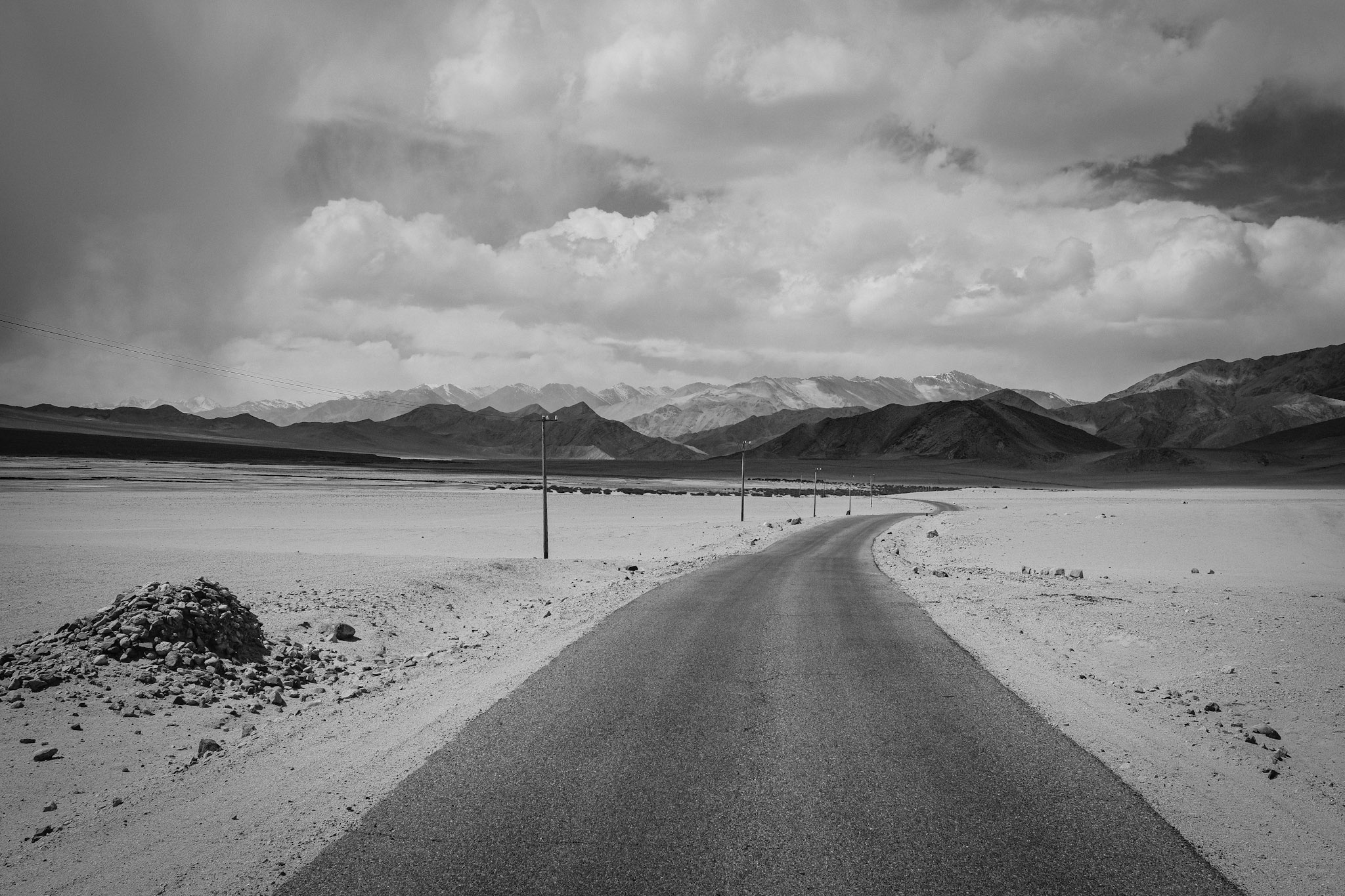
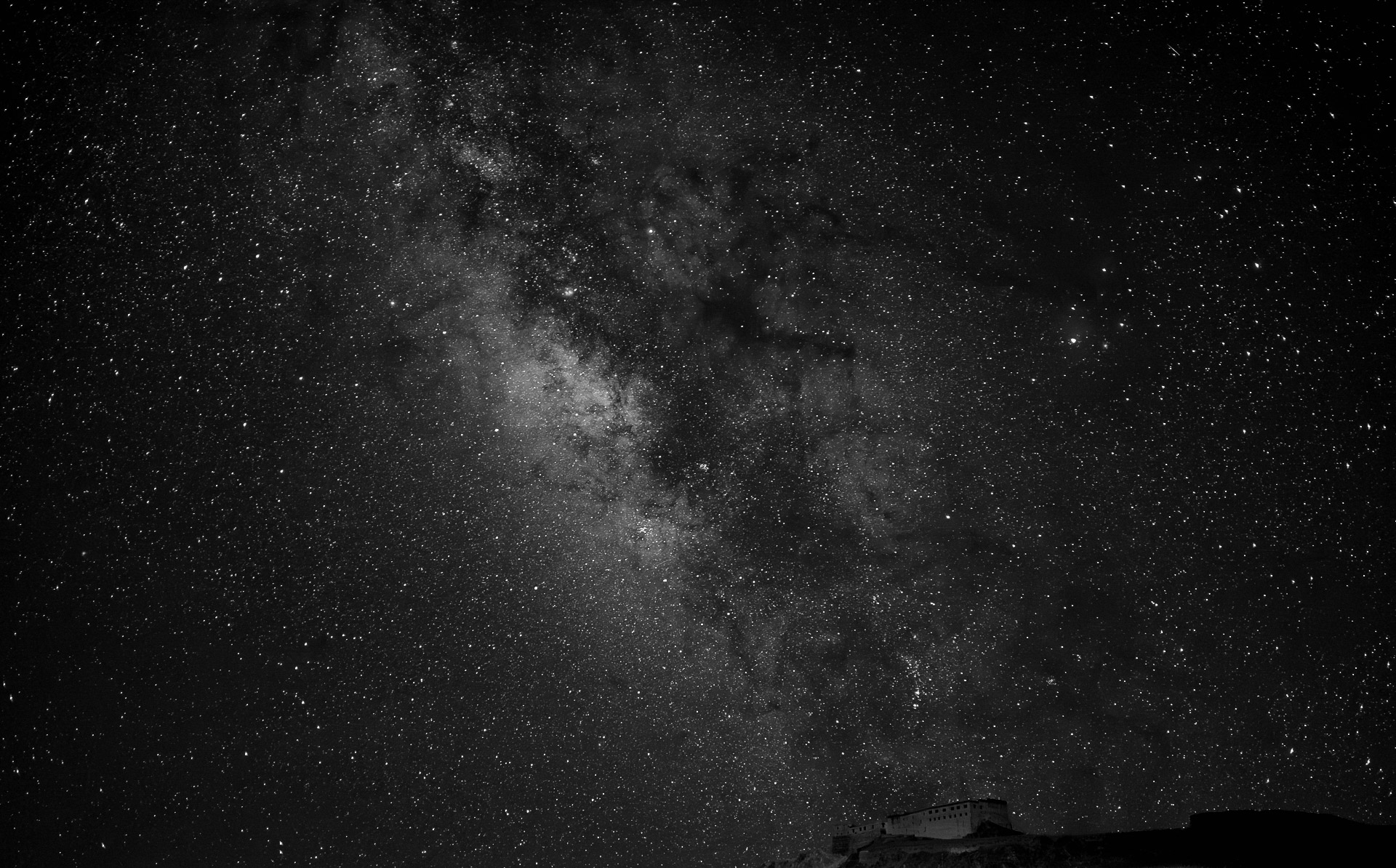
Hanle sits at the edge of this. A village of a few hundred people, mostly Changpa nomads who herd pashmina goats and yaks across the plateau. A monastery on a hill, built in the seventeenth century. And above the village, on a ridge shaped like a scorpion’s pincer, an astronomical observatory: one of the highest in the world, positioned here because the air is so thin and dry and dark that the telescopes can see further into space than almost anywhere else on Earth.
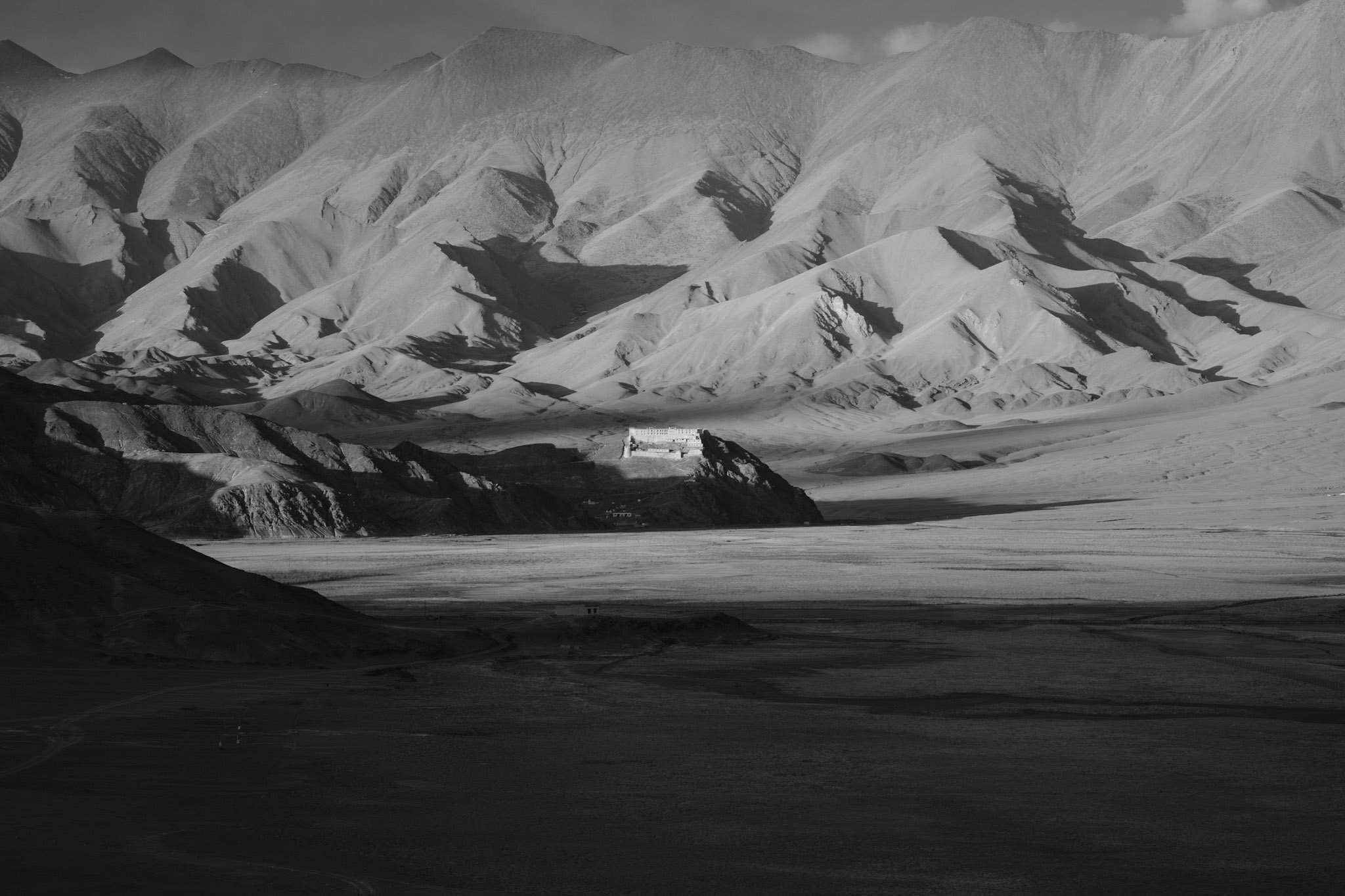
I did not come for the observatory, though I visited it. I came because someone had told me the plateau was a place where you could walk for hours without seeing another person, where the silence was so complete it became a kind of sound, where the landscape was so large it made your own concerns seem very small.
I needed my concerns to seem small. I needed something vast enough to hold them without comment.
I walked for hours that first day, following a track that led nowhere in particular, just out onto the plain where the ground was hard and brown and scattered with stones. The cold was sharp but not unbearable. The light was the cleanest I had ever seen, every edge precise, every shadow dark as ink. I could see for miles in every direction, and in every direction there was nothing: no trees, no buildings, no people. Only the mountains in the distance, snow-capped and silent, and the sky pressing down, and the faint silver line of a river far below in a valley I could not reach from where I stood.
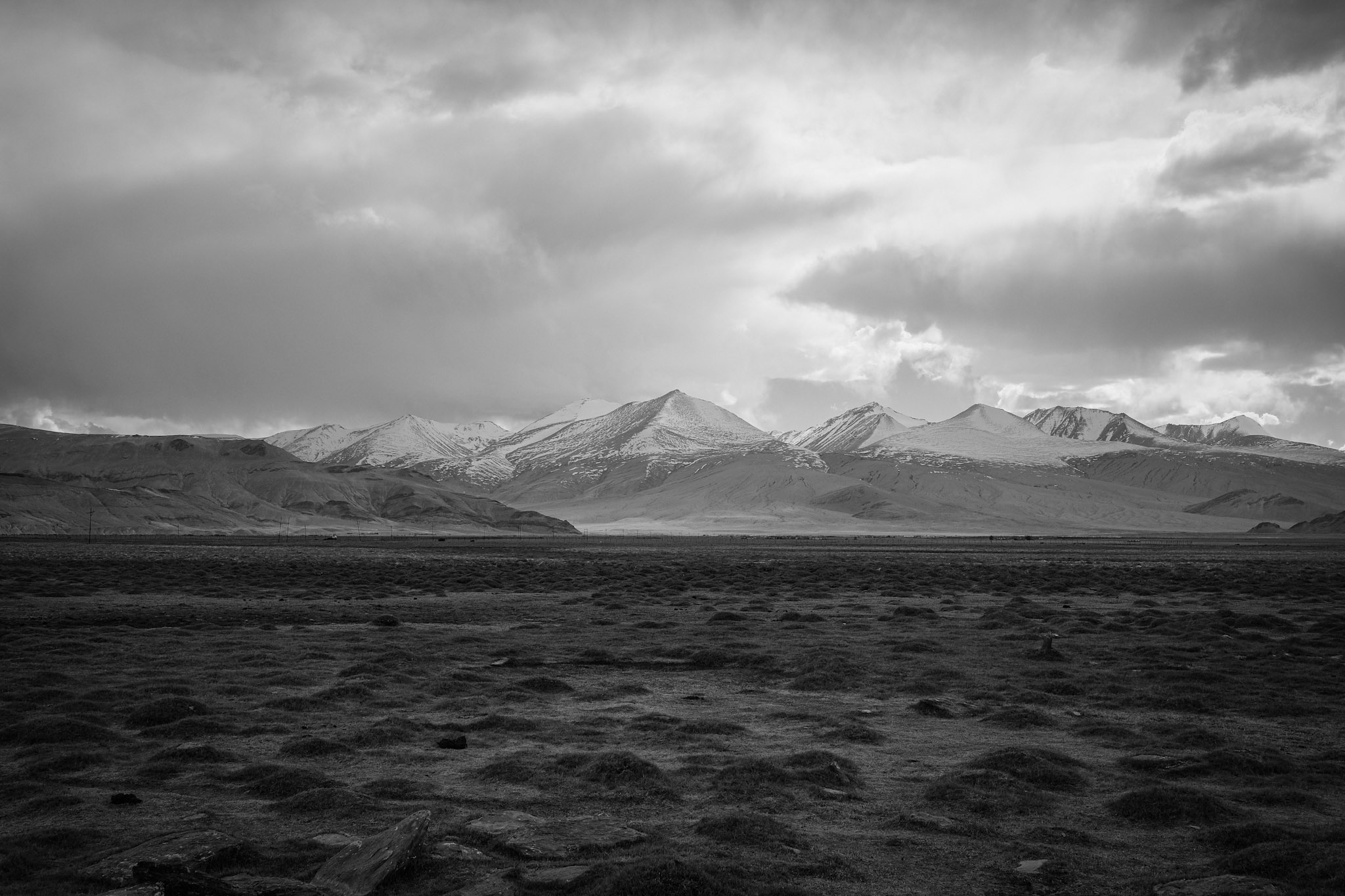
I sat down on a rock and I wept.
Not gracefully, not cinematically. I wept in the way that the body weeps when it has finally found a place large enough to hold what it has been carrying: ugly, convulsive, snot running down my face, my breath ragged in the thin air. I wept for V, who would never see this sky, who would never argue with me again about her hair. I wept for the years I had spent pretending I was fine. I wept for reasons I could not name, for the sheer relief of being in a place where no one could see me and no one required me to be whole.
The plateau did not respond. The wind continued. The cold continued. The mountains stood where they had stood for millions of years. And in that indifference, something loosened. Not healed. Not fixed. Just loosened, like a knot that has been worried at for so long you have forgotten it was ever tied.
One night, in a homestay in Hanle, I ate rice and dal and a thin yak meat curry, served by a woman whose face was weathered by wind and sun into a map of the plateau itself. We understood very little of what we spoke to each other, but she watched me eat with a kind of satisfied attention, refilling my cup with tea, adjusting the blankets on the bed she had prepared. Outside, the temperature dropped to minus twenty. Inside, a small stove burned dried yak dung, filling the room with a smell that was earthy and not unpleasant. I slept in all my clothes, under four blankets, and still woke in the night with cold feet.
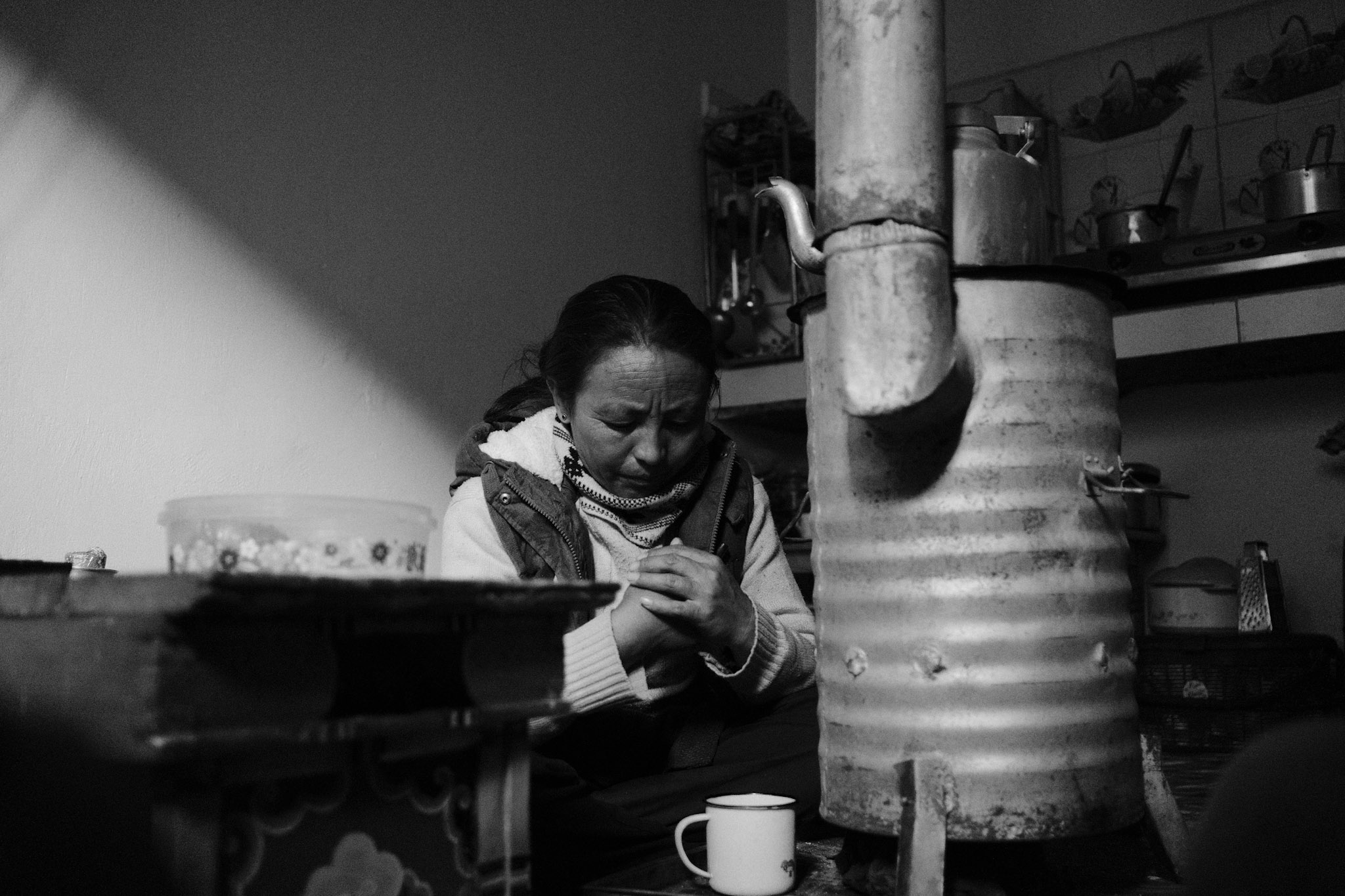
Late in the morning, I walked to the monastery. It sits on a hill above the village, its whitewashed walls bright against the brown of the rock. Inside, a few monks were performing their second prayers, their voices low and rhythmic, a sound that seemed to come from the walls themselves. I sat in the back and listened. I did not understand the words, but understanding was not the point. The point was the sound, the continuity of it, the sense that these prayers had been sung in this room for four hundred years and would continue to be sung long after I was gone.
The Buddhists have a word, anicca: impermanence. Everything that arises also passes away. This is not a tragedy; it is simply the nature of things. To resist it is to suffer. To accept it is not to stop feeling loss, but to stop adding to the loss the further suffering of wishing things were otherwise.
I did not become a Buddhist on the Changthang. But I began to understand something about the shape of grief, about the way it needs space rather than solutions, about the way a landscape large enough and silent enough can hold what you cannot hold yourself. The plateau did not take my grief away. It simply made room for it. And in that room, the grief began to change, to settle, to become something I could carry rather than something that carried me.
Peter Matthiessen went to Nepal to search for the snow leopard, but really he went to grieve his wife, who had died of cancer. He did not find the leopard. He wrote: “I have the sense of being in the center of a world that is not my world.” That sentence has stayed with me. The Changthang was not my world. But I was in it, for a few days, and that was enough.
The Indus, from the Changthang, is a distant thing. Its tributary, the Hanle River, flows north to join it at Loma, near Nyoma. But up on the plateau, the rivers are small, silver threads in the brown immensity, easily missed if you are not looking. The scale is wrong for rivers. The scale is wrong for humans.
I would return to Ladakh, to other walks, to the Indus in its more intimate stretches where the valley narrows and the river runs turquoise and fast. But the Changthang stayed with me differently. It was the place where I learned that grief does not end. It becomes part of the landscape of the self. The work is not to move past it but to find a country large enough to hold it.
V would have hated it here, I think. Too cold, too empty, too far from a good bookshop. But she would have understood why I came.
III. The Valleys West of Leh
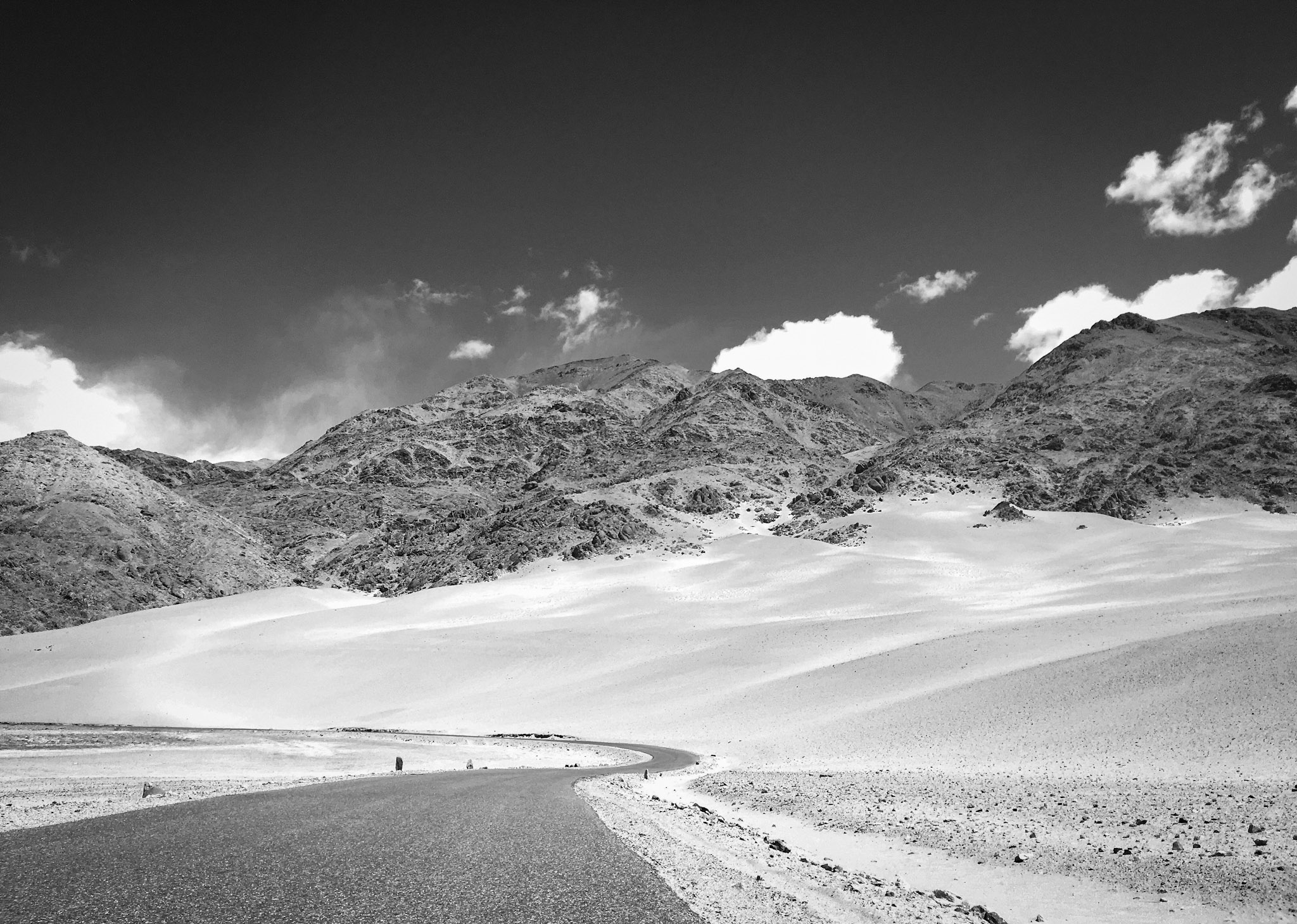
The road to Ulley follows the Indus.
You leave Leh heading west, toward Kargil, toward Srinagar, though you will not go that far. The river is beside you almost immediately, that impossible colour threading through the valley floor. At Nimmu, you pass the confluence where the Zanskar joins the Indus, two rivers of different colours meeting and not quite mixing, the turquoise and the grey-green braiding together. In winter, the confluence is partly frozen, the ice forming shelves along the banks, and the meeting of the waters has a strange stillness to it, as though both rivers have paused to consider what comes next.
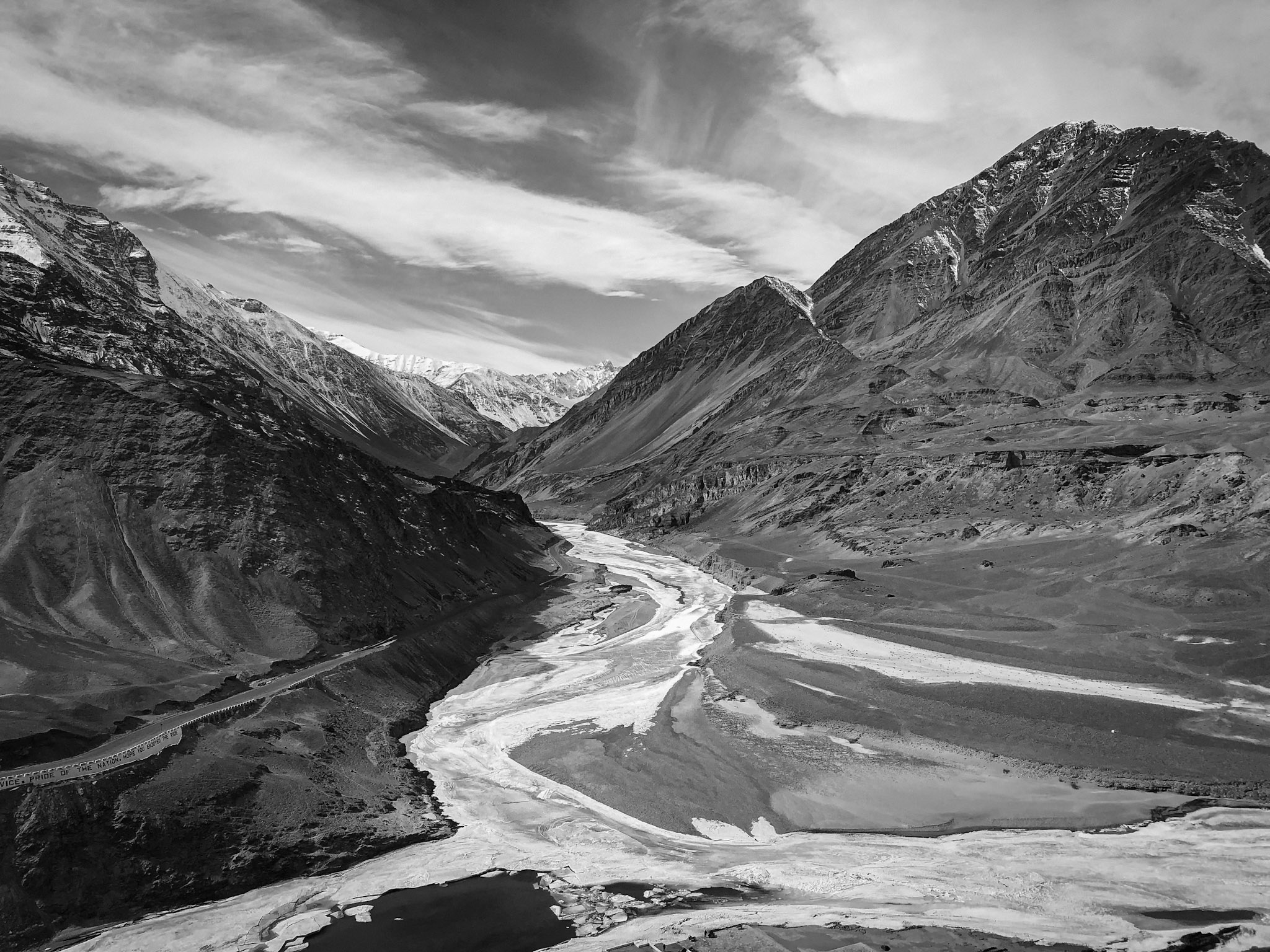
After Nimmu, the road continues west, the Indus on your left, the mountains rising steep on both sides. The valley here is narrower than on the Changthang, more intimate. You are not above the river looking down at a silver thread. You are next to it, close enough to hear it, to see the way the light changes on its surface as the clouds move. The water is fast and cold and very clear. In the shallows, you can see the stones on the riverbed, each one distinct.
At Likir, you turn north. The Indus falls away behind you, and you enter a different kind of country: the Ulley Chhu valley, a stream-cut passage winding up toward a village at nearly four thousand metres. The landscape here is big, expansive, the mountains opening rather than closing. And somewhere in those mountains, invisible, patient, waiting, are the snow leopards.
I came to Ulley in winter, a few years after Hanle.
There was a person. The relationship lasted only a few months, but it had opened something in me I did not know was closed. I am not speaking of romance, exactly, though romance was part of it. I am speaking of the way another person can, without intending to, rearrange the furniture of your interior life. You meet them, and something shifts. You did not know it was possible to feel this way, to see this way, to want these particular things. And then it ends, as such things end, not dramatically but quietly, a door closing, a conversation that trails off, and you are left standing in a room that has been rearranged, trying to remember where everything used to be.
The falling out of love finished on this trip. It had begun before I left, but in the city there were distractions, reasons to pretend nothing had changed. In Ulley, there was nothing but the cold and the mountains and the long hours of waiting for an animal that might never appear. The silence made room for what I had been avoiding. By the time I left, the thing was done. Not understood. Just done, the way a fever breaks.
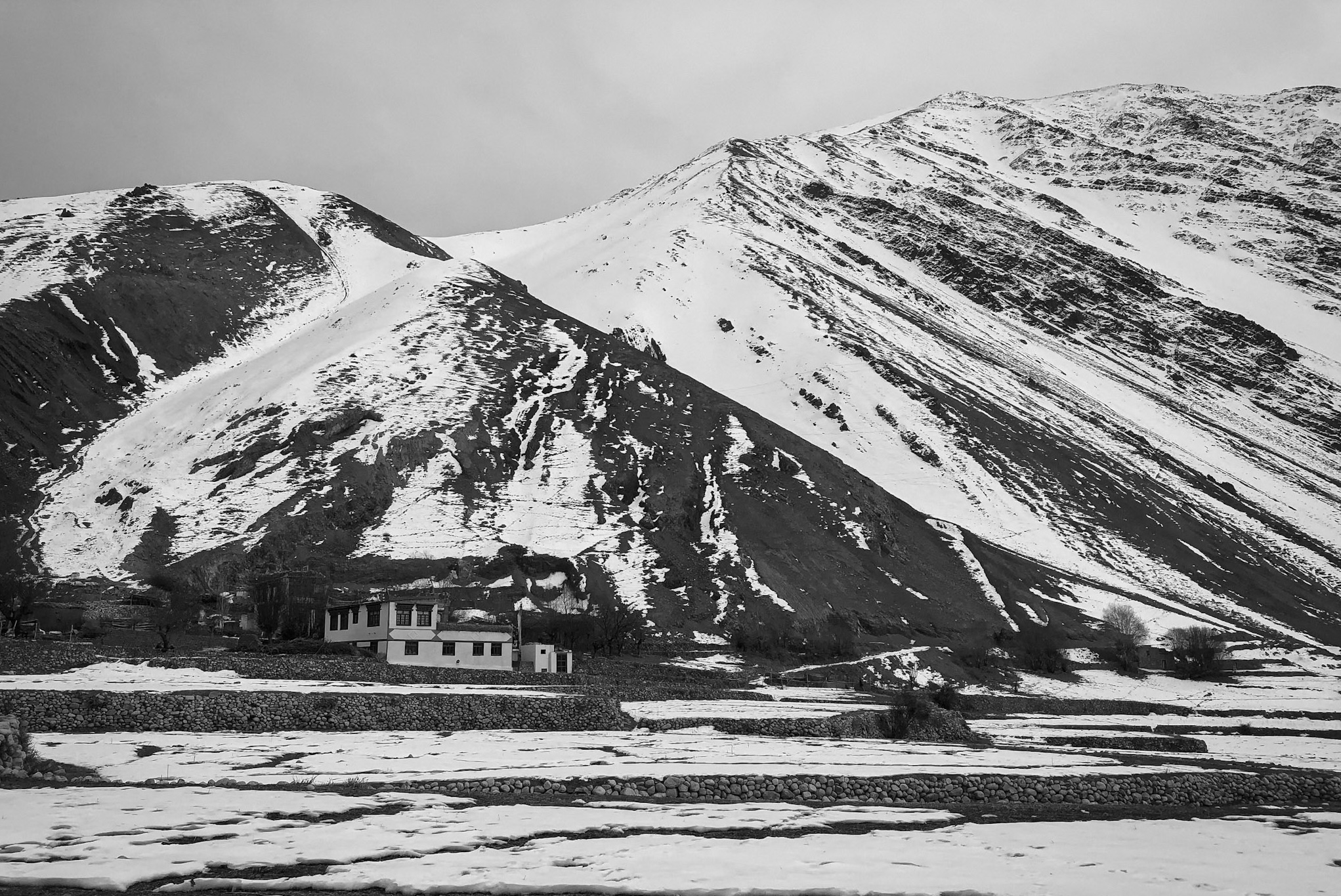
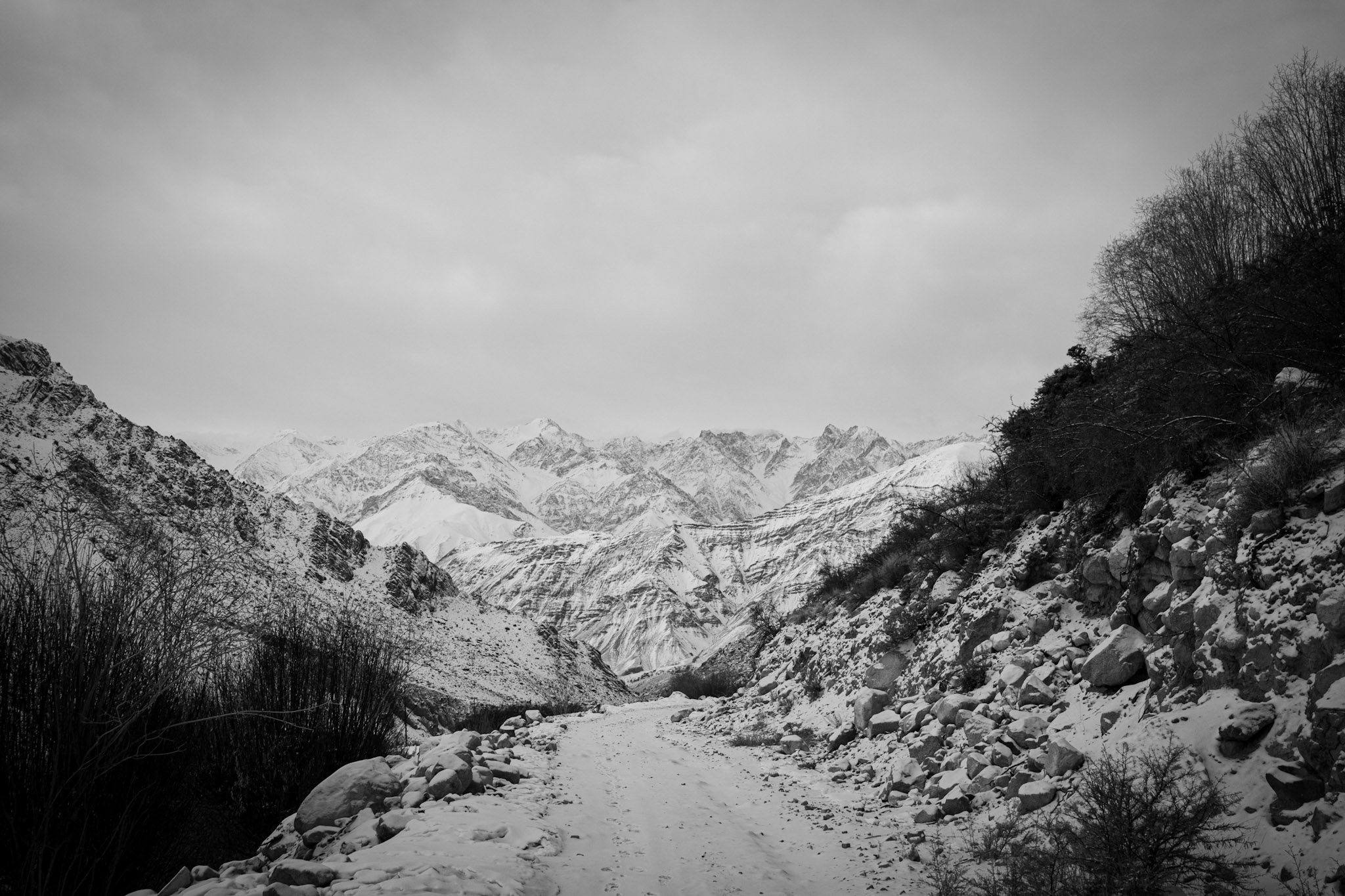
The snow leopard is called the ghost of the Himalayas. This is not metaphor. It is description.
They live at altitudes so high, in terrain so rugged that even the people who have spent their lives in these mountains rarely see them. Their fur is the colour of rock and snow and shadow. They move without sound. A snow leopard can be watching you from fifty metres away and you will not know it is there. You will scan the cliff face with binoculars, with spotting scopes, and see nothing but stone, and then the stone will move, and you will realise that what you thought was a boulder was a cat.
In Ulley, the spotters go out before dawn, climbing to ridges where they can glass the valleys below or peaks above. They look for ibex first, the snow leopard’s preferred prey. Where the ibex gather, the leopard may follow. The spotters know the terrain intimately, know which routes the animals take, which caves they shelter in, which ridges they use to move between valleys. They communicate by radio, calling out sightings: ibex on the north slope, a wolf in the lower valley, and sometimes, rarely, the words everyone is waiting for.
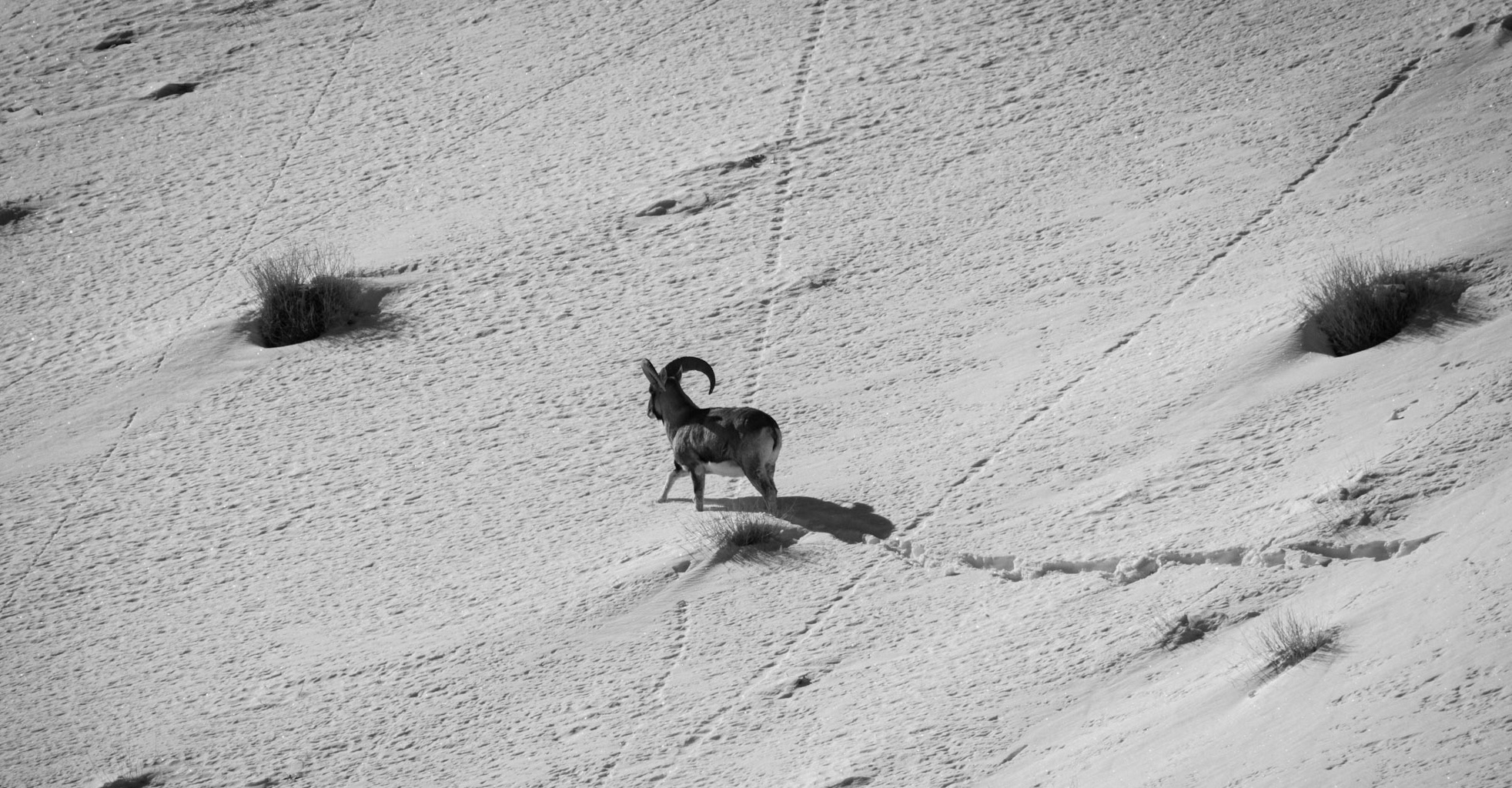
I walked with them for several days. We climbed in the dark, the cold so sharp it felt like a blade against the face, the stars still visible overhead. We sat on exposed ridges for hours, scanning, waiting, not speaking. The silence was immense. The only sounds were the wind and the occasional crack of rock contracting in the cold and the soft static of the radio.
I did not see a snow leopard.
This is the thing about the snow leopard: you cannot summon it. You can do everything right, you can be patient, you can be still, you can be present. And the leopard will not come. Or it will come, and you will not see it, because it does not wish to be seen. The animal exists on its own terms. Your desire to witness it is irrelevant to its life.
There is something in this that I found consoling, though not at the time, when I was cold and tired and disappointed. Later, turning it over, I began to understand that the leopard’s absence was as much a teaching as its presence would have been. You cannot make a thing appear by wanting it. You cannot hold a thing by grasping it. You can only be present, be patient, be still, and let what comes come.
The relationship that was ending had been, in part, an attempt to summon something. I had wanted it so badly, had bent myself toward it with such intensity, that I had failed to notice it was not bending back. The leopard does not come because you need it to come. A person does not love you because you need them to love you. The heart of another person is as wild and indifferent as anything in these valleys, and the work is not to capture it but to let it be wild.
I did not learn this gracefully. I am not sure I have learned it yet. But I began to learn it in Ulley, in the long cold hours of waiting for an animal that never came, in the silence that made room for everything I had been refusing to feel.
On the last day, I walked alone along the Ulley Chhu, downstream toward where it would eventually join the Indus.
The stream was partly frozen, ice along the edges, dark water running fast in the centre. I walked slowly, not trying to get anywhere. The sun was out, the sky a deep cold blue, and the light on the water was sharp and clear.
I stopped at a bend where the stream widened into a shallow pool. The ice here was thin at the edges, white and opaque, giving way to dark water in the centre where the current kept it from freezing. I could see the stones on the streambed, grey and brown and rust-coloured, each one sharp in the clear water. The cold rose off the surface. A thin mist hung just above the water where the temperature difference made the air visible.
I stood there for a long time, not thinking exactly, just looking. The water moved. The ice held still. The mountains rose on either side, brown and grey and white at the peaks. A bird I could not identify flew low over the stream and disappeared around the bend. The silence was not empty. It was full, somehow, full of cold and light and the sound of water and my own breath, visible in the air.
I thought about V, who had been dead for many years now. I thought about the person, who was alive somewhere, in their own life, carrying their own griefs I would never know. I thought about all the things I had wanted and not gotten, all the things I had gotten and lost. The cold was in my face, in my fingers, in my lungs. The stream made its sound.
Somewhere in these mountains, a snow leopard was moving. I would not see it. It did not matter.
The Indus, when I reached it, was wide and slow at this point, the valley opening up. The colour was different here, greyer, the glacial silt more visible. I stood on the bank and watched it move, that ancient water, that patient indifferent flow.
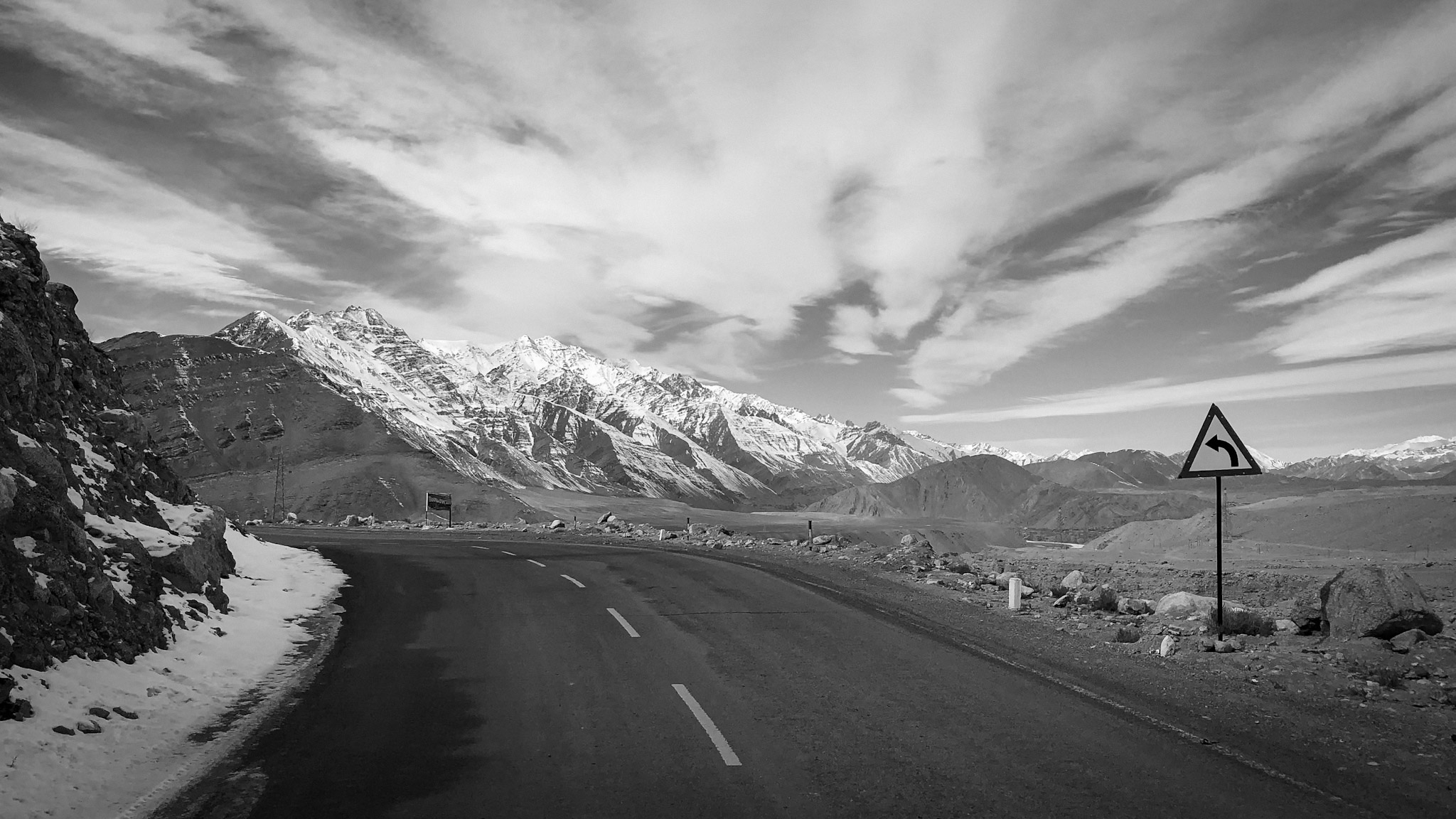
The monk on the plane had said: walk next to it.
And I had. The walking was not the cure. The walking was the practice. And the practice was enough.
IV. The Shadow in the Riverbed
There is a photograph I have never published.
In it, I am standing in a dry stretch of the riverbed, the Indus reduced to a distant channel, the stones pale and sun-bleached around me. It is afternoon. The light is flat and hard. My shadow falls beside me, slightly elongated, the shape of a man standing with his arms at his sides.
I do not remember why I took the photograph. I remember the feeling of standing there, the stones shifting slightly underfoot, the wind cold on my face. I remember looking down at my shadow and thinking that it looked like someone else, some other man standing in some other riverbed, waiting for something that would not come.
The photograph shows none of this. It shows a figure in a landscape, anonymous, unreadable. The scale is impossible to judge. The figure could be large or small, the riverbed wide or narrow. There is no context, no story. Just a man and his shadow and the stones and the sky.
I have tried, in these pages, to say what the walking did to me. I have tried to describe the colour of the river, the quality of the cold, the weight of the sky on the Changthang, the silence of the Ulley valley. I have tried to say something true about grief: how it waits, how it surfaces, how it changes without ending.
I am not sure I have succeeded. The words come out shaped like conclusions, like lessons learned, like wisdom earned through suffering. But the experience was not like that. The experience was confused, cold, and often boring. Hours of walking that led nowhere. Days of waiting for an animal that never came. Nights of lying awake in inadequate blankets, thinking about people who were dead or gone, wondering what I was doing so far from home.
The walks did not heal me. I am not healed. The grief is still there, for all people gone, for all the ordinary losses that accumulate into a life. But the walks gave me somewhere to put it, somewhere it could exist without requiring me to fix it or explain it or move past it.
Shepherd wrote of her mountain: “I am on the mountain. I am in the mountain.” The grammar of that sentence is the grammar of these walks. I was not looking at the Indus. I was next to it. I was, in some way I cannot fully explain, in the walking itself, in the cold and the light and the sound of water and the rhythm of my own footsteps on stone.
The Indus flows northwest from Ladakh, into Pakistan, through Punjab, into Sindh, and finally into the Arabian Sea south of Karachi. It passes through a country I cannot visit, watering fields I will never see.
Sometimes I think about the water I saw on those walks. By now, it is long gone, dispersed into the sea, evaporated into clouds, fallen as rain on some other continent. The Indus I walked next to no longer exists. It has been replaced by other water, from other snowfields, other glaciers. The river is the same river and not the same river, continuous and discontinuous, like grief, like memory, like the self that carries both.
There will be more walks. I know this, though I cannot say when, or what I will carry when I return. The Indus will be there, the same river and not the same river. And I will be there, the same person and not the same person. What I will find, what I will feel, I cannot say now. But the walking is not finished.
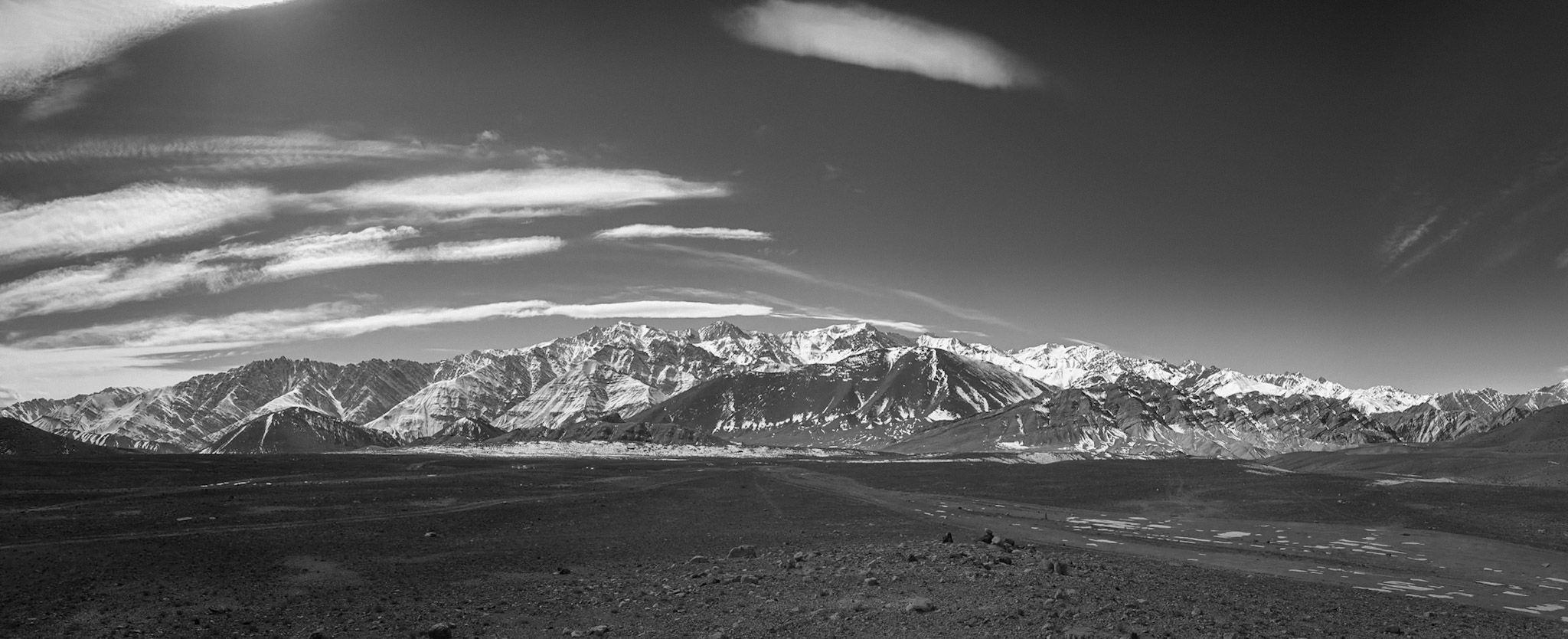
The monk on the plane said: walk next to it. On its banks, in its valleys, and high up above it.
I do not know what he meant, exactly. I do not know if he meant anything beyond the practical, the obvious: that the Indus is beautiful, that the walking is good, that the mountains are worth seeing. Perhaps there was no deeper meaning. Perhaps the depth is something I have added, looking back, trying to make sense of what I did and why.
But I do not think so. I think he saw something in me, that monk in the maroon robes, something I did not yet see in myself. I think he knew that I would need to walk, that the walking would be a kind of practice, that the practice would not cure anything but would make the incurable easier to bear.
Or perhaps I am wrong. Perhaps he was just a monk on a plane, making conversation, filling the silence.
It does not matter. The walking happened. The river was there. And I am still here, carrying what I carry, moving like water toward whatever comes next.